OUTBREAK ALERT — June 2026
The World Health Organisation (WHO) declared the 2026 Ebola outbreak a Public Health Emergency of International Concern (PHEIC) on 16 May 2026. As of 23 June 2026, over 1,048 confirmed cases and 267 deaths have been reported — primarily in the Democratic Republic of Congo (DRC) and Uganda. India has reported zero confirmed cases. The Government of India has issued a travel advisory and activated nationwide surveillance.
Ebola virus disease (EVD) is one of the most feared infectious diseases in modern medicine — not because it is common, but because of its rapid onset, severe symptoms, and historically high fatality rate. It has returned to the headlines in 2026, with a new outbreak caused by a strain called Bundibugyo ebolavirus, which has now been declared a global health emergency.
For people in India, the immediate risk remains very low. However, understanding what Ebola is, how it spreads, what symptoms to watch for, and what precautions to take is important — especially for those who have recently travelled to or from affected regions.
Dr. Sanjay Mahajan, General Physician and Intensivist at Kailash Hospital, Noida, explains everything you need to know.
What Is Ebola Virus Disease?
Ebola virus disease is a severe, often fatal illness caused by a group of viruses known as orthoebolaviruses (formerly called ebolaviruses). It was first identified in 1976 near the Ebola River in what is now the Democratic Republic of Congo — hence the name.
There are four types of orthoebolaviruses known to cause disease in humans:
| Virus Type | Strain Name | Key Outbreaks | Fatality Rate |
| Ebola virus (most common) | Orthoebolavirus zairense | 1976, 2014–16 West Africa (largest ever) | Up to 90% |
| Sudan virus | Orthoebolavirus sudanense | 1976, Uganda 2022 | 41–65% |
| Bundibugyo virus (2026 outbreak) | Orthoebolavirus bundibugyoense | Uganda 2007, DRC 2012, DRC/Uganda 2026 | 25–55% |
| Tai Forest virus | Orthoebolavirus taiense | Single human case, 1994 | Non-fatal (1 case) |
The 2026 outbreak is caused by Bundibugyo ebolavirus — a strain for which there is currently no approved vaccine or specific treatment. This makes the current outbreak particularly challenging to control.
The 2026 Ebola Outbreak: What Is Happening Right Now?
The current outbreak is the 17th recorded Ebola outbreak in the DRC and the fastest-growing in history in terms of case count during its first month. It began in Ituri Province, northeastern DRC, where an unusual cluster of deaths in healthcare workers first raised the alarm in early May 2026.
Key Facts — 2026 Outbreak (as of 24 June 2026)
| Indicator | Detail |
| Causative agent | Bundibugyo ebolavirus (Orthoebolavirus bundibugyoense) |
| Outbreak declared | 15 May 2026 — DRC Ministry of Health |
| WHO PHEIC declared | 16 May 2026 |
| Confirmed cases (DRC) | 1,048+ confirmed cases as of 21 June 2026 |
| Confirmed deaths (DRC) | 267 deaths |
| Countries affected | DRC (primary), Uganda (cross-border cases confirmed) |
| Most affected area | Ituri Province, DRC (954 of total cases) |
| Vaccine status | No approved vaccine for Bundibugyo strain; clinical trials ongoing |
| Treatment | Supportive care only; clinical trials of MBP134 and REGN3479 underway |
| India status | Zero confirmed cases; high alert & surveillance activated |
Why Is This Outbreak Difficult to Control?
Several factors are making this outbreak harder to contain than previous ones:
- Currently, there isn’t an approved vaccine or treatment that specifically targets the Bundibugyo strain.
- Ongoing armed conflict in eastern DRC limiting access to affected zones
- High population mobility along the DRC-Uganda border corridor
- Contact tracing reaching only about 45% of contacts (WHO requires 90% for control)
- Healthcare worker infections — at least 16 healthcare workers confirmed infected
- Casual healthcare networks can make it pretty tough to keep infection control in check.
Ebola Virus Disease Symptoms: What to Look For
Ebola symptoms typically appear between 2 and 21 days after exposure to the virus, with an average onset of 8 to 10 days. The illness progresses in two phases, often described as ‘dry’ and ‘wet’ phases.
Phase 1 — Early (Dry) Symptoms (Days 1–5)
- Sudden high fever (above 38.5°C)
- Severe headache
- Intense fatigue and weakness
- Muscle and joint pain
- Sore throat
- Loss of appetite
Phase 2 — Later (Wet) Symptoms (Days 5–10)
- Vomiting and diarrhoea (often severe)
- Abdominal pain and cramping
- Rash on the body
- Unexplained bleeding or bruising — from gums, nose, or injection sites
- Blood in vomit, stool, or urine (in severe cases)
- Hiccups (a late and serious sign)
- Multi-organ failure in critical cases
IMPORTANT — When to Seek Immediate Medical Attention
If you develop fever, headache, or vomiting within 21 days of returning from DRC, Uganda, South Sudan, or other currently affected countries — seek immediate medical attention. Inform your doctor of your travel history before entering the clinic.
How Does Ebola Spread? Understanding Transmission
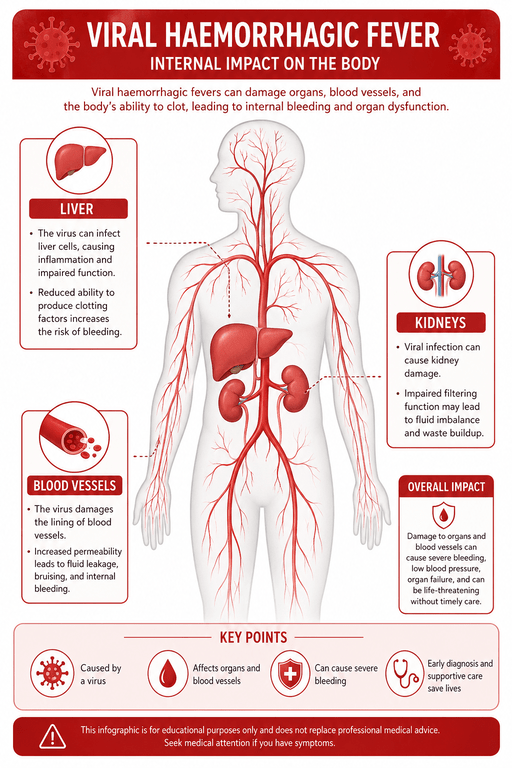
One of the most common questions people ask is: is Ebola contagious? The answer requires understanding exactly how the virus spreads — because unlike influenza or COVID-19, Ebola is not airborne.
How Ebola Spreads
- Direct contact with the blood, urine, saliva, semen, vomit, faeces, or other body fluids of an infected person who is showing symptoms
- Contact with contaminated objects such as needles, syringes, or medical equipment
- Contact with the body of someone who has died from Ebola — funeral and burial practices are a major transmission route
- Contact with infected animals (fruit bats, chimpanzees, gorillas) — the likely animal reservoir
How Ebola Does NOT Spread
- Through the air — Ebola is not airborne
- Through casual contact — sitting near, talking to, or passing an infected person is not a risk if they are not symptomatic
- Through food or water in non-endemic countries
- Through mosquitoes or other insect bites
A critical point: a person infected with Ebola is not contagious until symptoms appear. This means that someone who has been exposed but is not yet symptomatic does not pose a transmission risk to others — which is why contact tracing and monitoring during the 21-day incubation period is the cornerstone of outbreak control.
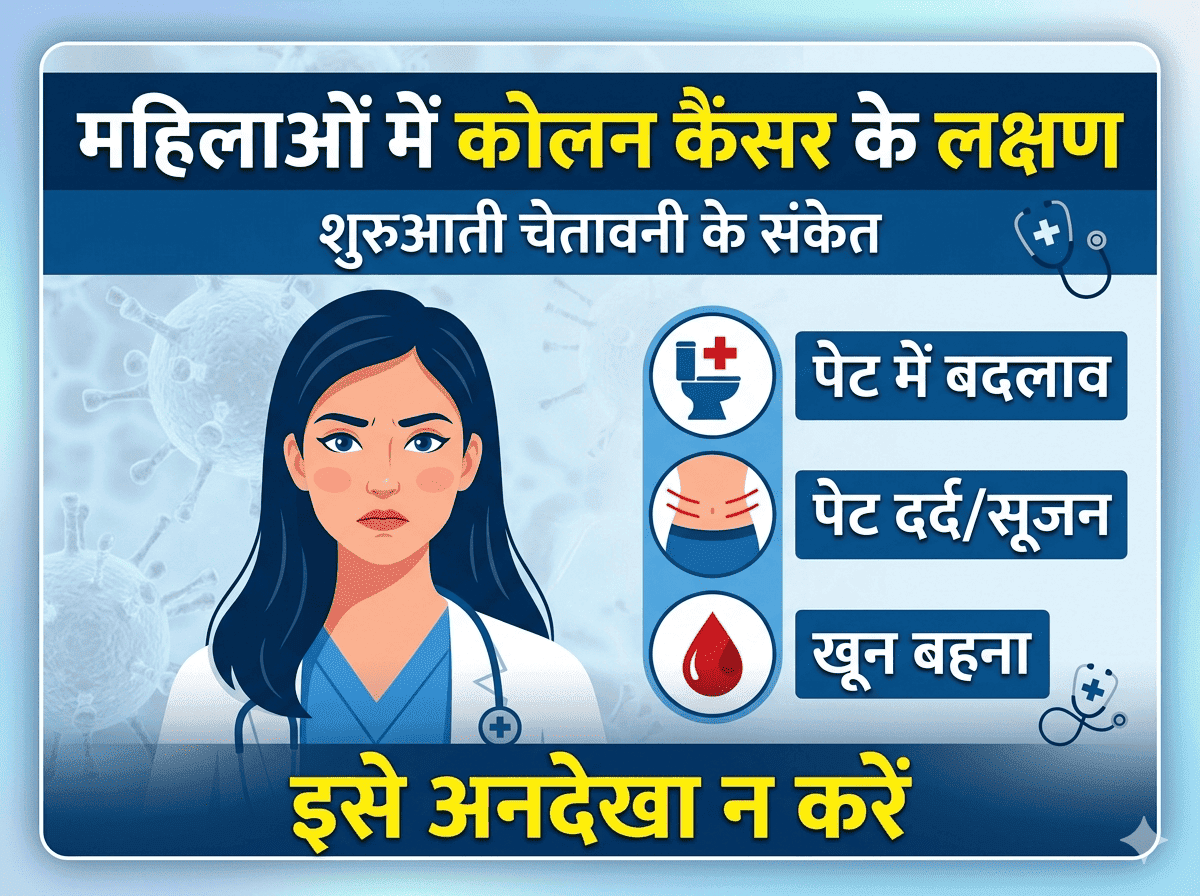
Most Searched: Signs of Colon Cancer in Women: Early Warning Symptoms You Should Not Ignore
What Is the Ebola Fatality Rate?
Ebola has historically been associated with very high case fatality rates — ranging from 25% to 90% depending on the strain and the quality of medical care available. The 2026 Bundibugyo strain has a case fatality rate estimated at 25–55%, based on the two previous Bundibugyo outbreaks (Uganda 2007: 32%; DRC 2012: 55%).
| Outbreak | Strain | Cases | Deaths | Fatality Rate |
| 2014–16 West Africa | Zaire | 28,646 | 11,323 | ~40% |
| Uganda 2007 | Bundibugyo | 149 | 37 | ~25% |
| DRC 2012 | Bundibugyo | 57 | 29 | ~51% |
| DRC/Uganda 2026 (ongoing) | Bundibugyo | 1,048+ (as of 21 Jun) | 267+ | ~25% confirmed |
Early diagnosis, prompt supportive care, and access to advanced medical facilities significantly improve survival rates. In countries with strong healthcare infrastructure, outcomes tend to be better than in outbreak epicentres where hospitals are overwhelmed.
Also Read: Hantavirus Outbreak 2026: Symptoms, Cases, and Should India Be Worried?
Is Ebola Curable? Current Treatment Options
There is currently no FDA-approved cure or vaccine specifically for Bundibugyo ebolavirus — the strain causing the 2026 outbreak. The approved Ebola vaccine (ERVEBO) and treatments like mAb114 and REGN-EB3 were developed for Zaire ebolavirus and are not expected to work against the Bundibugyo strain.
Current Treatment Approach
- Intensive supportive care — fluids, electrolyte replacement, oxygen, management of secondary infections
- Clinical trials of MBP134 (a monoclonal antibody) and REGN3479 are ongoing in DRC and Uganda, supported by WHO
- Post-exposure prophylaxis with obeldesivir is being trialled for high-risk contacts
- Four experimental Bundibugyo vaccines are now in development: by IAVI, Moderna, Oxford (ChAdOx1), and a Cambridge AI-designed candidate
People who recover from Ebola build up antibodies that could help shield them from getting infected by the same strain again. Recovery from Ebola, while difficult, is possible with early and aggressive supportive care.
Most Searched: Why Is Colorectal Cancer Rising in Young People?
Is India at Risk? Ebola and India — 2026 Update
The question most Indians are asking right now is straightforward: is Ebola in India? The answer, as of 24 June 2026, is no. India has not reported a single confirmed Ebola case in the 2026 outbreak.
However, the Government of India has taken proactive precautionary measures:
| Date | Action Taken by India |
| 21 May 2026 | Ministry of Health issued Standard Operating Procedures (SOPs) for international passengers and airports |
| 22 May 2026 | Guidelines issued for hospital infection control, isolation facility preparedness, and safe handling of human remains |
| 24 May 2026 | Travel advisory issued — Indians advised to avoid non-essential travel to DRC, Uganda, and South Sudan |
| Ongoing | IDSP units and Airport Health Organisations are instructed to maintain heightened surveillance for unexplained febrile illness in international travellers |
| Ongoing | NCDC, ICMR, DGHS, Civil Aviation, and Immigration authorities coordinating for preparedness and early detection |
Who in India Is at Higher Risk?
- People who have recently travelled to or from DRC, Uganda, or South Sudan
- Healthcare workers treating international travellers with unexplained fever
- People who have had contact with someone who recently returned from affected regions and is now symptomatic
For the general population in India with no recent travel to affected countries, the risk is negligible. Ebola does not spread through casual or community contact in non-outbreak settings.
Also Read: MV Hondius Hantavirus Cruise Ship Outbreak: Map, Spread & Latest News
Ebola Prevention: How to Protect Yourself
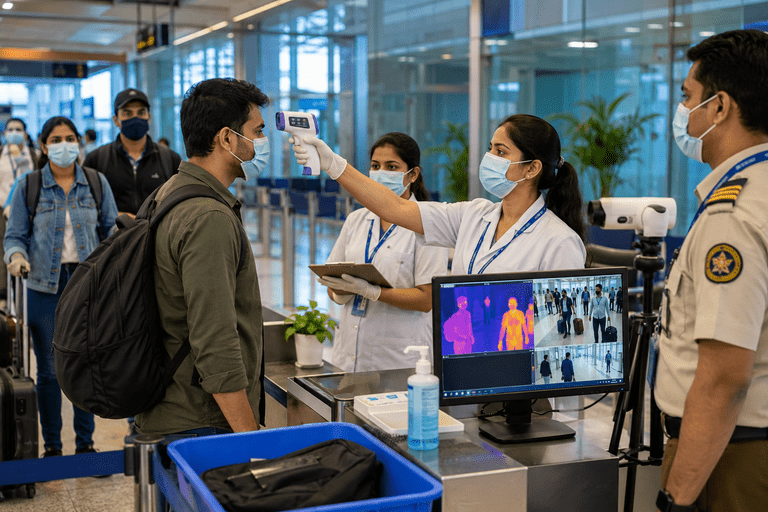
For people in India, the most relevant prevention measures are:
For Travellers
- Avoid non-essential travel to DRC, Uganda, and South Sudan
- If travel is unavoidable, avoid contact with sick people, blood, and body fluids
- Avoid attending funerals or burial rituals in affected areas where contact with the deceased may occur
- Avoid contact with bats, primates, or bushmeat
- Practise rigorous hand hygiene — wash hands with soap and water or use alcohol-based sanitiser
- Monitor for symptoms for 21 days after returning and report any fever or illness to a doctor immediately
For Healthcare Workers
- Use full Personal Protective Equipment (PPE) when treating patients with unexplained fever who have a history of travel to affected regions
- Follow hospital infection control protocols strictly
- Notify infection control teams immediately for any suspected case
- Avoid needle-stick injuries and ensure safe disposal of sharps
For the General Public
- Avoid panic — Ebola is not airborne and does not spread in India’s current context
- Stay informed through official government and WHO sources only
- Avoid sharing unverified information about Ebola on social media
- Standard hygiene — handwashing, avoiding contact with visibly sick people — remains the best everyday precaution
“Ebola is a serious disease, but it is not a reason for panic in India. The virus does not spread through air or casual contact, and India has robust surveillance systems in place. If you have returned from an affected country and develop fever within 21 days, please seek medical attention immediately and mention your travel history. Early reporting is the single most important thing a patient can do.” — Dr. Sanjay Mahajan, General Physician & Intensivist, Kailash Hospital, Noida
Ebola vs. Other Viral Haemorrhagic Fevers: Key Differences
| Feature | Ebola | Dengue | Marburg | COVID-19 |
| Cause | Orthoebolavirus | Dengue virus (DENV) | Orthomarburgvirus | SARS-CoV-2 |
| Transmission | Body fluids (direct contact) | Aedes mosquito bite | Body fluids (direct contact) | Airborne / respiratory droplets |
| Incubation period | 2–21 days | 4–10 days | 2–21 days | 2–14 days |
| Bleeding symptoms | Severe — a hallmark | Mild (dengue haemorrhagic) | Severe (similar to Ebola) | Not typical |
| Airborne? | No | No | No | Yes |
| Vaccine available? | Yes (Zaire only; not Bundibugyo) | Yes (limited) | No | Yes |
| Fatality rate | 25–90% (strain-dependent) | Less than 1% with treatment | 24–88% | Less than 1% (vaccinated) |
Also Read: हंता वायरस क्या है? लक्षण, कारण, इलाज और बचाव की पूरी जानकारी
Frequently Asked Questions (FAQ)
Q1. Is Ebola in India in 2026?
No. As of 24 June 2026, India has not reported any confirmed Ebola cases. The Government of India has rolled out travel advisories and ramped up airport surveillance, but thankfully, there’s no domestic outbreak to worry about.
Q2. What are the main symptoms of Ebola?
Initial symptoms include sudden high fever, severe headache, fatigue, and muscle pain — similar to flu. This is followed by vomiting, diarrhoea, rash, and in severe cases, unexplained bleeding. Symptoms appear 2–21 days after exposure.
Q3. Is Ebola contagious — can it spread like COVID-19?
No. Unlike COVID-19, Ebola is not airborne. It spreads only through direct contact with the blood or body fluids of a symptomatic infected person. You cannot catch Ebola by being in the same room as someone who is infected.
Q4. Is Ebola curable?
There is no specific approved cure for the Bundibugyo strain causing the 2026 outbreak. Treatment is supportive care. Clinical trials of new monoclonal antibody therapies are ongoing. Early medical care significantly improves survival chances.
Q5. What is the Ebola fatality rate in 2026?
The 2026 outbreak fatality rate among confirmed cases is approximately 25% — lower than some previous Ebola outbreaks, but still very high compared to most infectious diseases. Early treatment can improve outcomes.
Q6. Should I be worried if I have not travelled to Africa?
If you have not recently travelled to DRC, Uganda, or South Sudan, and have had no contact with someone who has, your risk is effectively zero. Ebola does not spread through community contact in India’s current situation.
Q7. What should I do if I have recently returned from DRC or Uganda?
Monitor yourself for fever, headache, or other symptoms for 21 days after your return. If you develop any symptoms, contact a doctor immediately and clearly state your travel history. Do not self-medicate or delay seeking care.
Q8. Ebola kya hai? (What is Ebola in the Hindi context)
Ebola ek ghatak viral bimari hai jo sankramit vyakti ke khoon ya body fluids ke seedhe sampark se failti hai. Yeh hawa ke zariye nahi failti. India mein abhi tak koi confirmed case nahi hai, lekin sarkar ne airports par surveillance badha di hai.
Most Searched: Weight Loss Diet Plan: Expert Tips to Lose Weight Fast, Naturally & Permanently
When to See a Doctor at Kailash Hospital
Consult a doctor immediately if you:
- Have developed fever, headache, or vomiting within 21 days of returning from DRC, Uganda, South Sudan, or Kenya
- Have had direct contact with a confirmed or suspected Ebola patient
- Are you a healthcare worker who has had unprotected exposure while treating a suspected case
Do not wait — early reporting, even if it turns out not to be Ebola, is critical for your safety and that of others around you. Please call ahead before visiting so the hospital can ensure the right protocols are in place.
Conclusion
The 2026 Ebola outbreak in DRC and Uganda is a serious global health event — the second-largest Ebola outbreak in recorded history, and the fastest-growing in its first month. India faces a low but not negligible risk, given the volume of international travel between India and Africa.
The virus is not airborne, does not spread through casual contact, and India has zero confirmed cases. The Government of India has activated a robust surveillance and preparedness response. For the vast majority of Indians, the practical guidance is simple: stay informed through reliable sources, avoid unnecessary travel to affected countries, and if you develop a fever after returning from an affected region, seek medical attention immediately.