Colorectal cancer (CRC) was once predominantly a disease of people over 60. That has changed. Over the past two decades, rates of colon and rectal cancer in adults under 50 have risen sharply across the United States, Europe, and increasingly in India. This phenomenon — called early-onset colorectal cancer (EOCRC) — has emerged as one of the most alarming trends in oncology.
Unlike older adults, young people are rarely screened for colon cancer. They are not considered at risk. Symptoms are dismissed as IBS, stress, or haemorrhoids. By the time a diagnosis is made, the cancer is often at an advanced stage.
This article explores the evidence behind the rise in colorectal cancer among young people, its causes, real patient cases from recent literature, and what can be done to change outcomes.
How Significant Is the Rise? — The Numbers
| ~50% of new colorectal cancer cases in India are diagnosed in patients under 50 years of age (significantly higher than Western incidence) |
| Region / Country | Trend in Under-50s | Source |
| United States | Incidence rising 2.4% per year since mid-1990s | SEER Database / NCI |
| United Kingdom | CRC in 25–49 age group up 51% over 20 years | Cancer Research UK, 2023 |
| India | ~50% of CRC patients under 50; right-sided CRC more common | Indian Journal of Cancer |
| Australia | Early-onset CRC rising 2–3% annually | AIHW, 2022 |
| South Korea | Highest incidence of CRC in young adults globally | WHO GLOBOCAN 2022 |
What Is Causing Colorectal Cancer to Rise in Young People?
No single cause explains the rise. Research points to a cluster of interacting lifestyle, dietary, microbial, and genetic factors. Here is what the evidence currently shows:
1. Dietary Changes — Ultra-Processed Foods & Red Meat
The dramatic shift toward ultra-processed food over the past 30 years closely mirrors the rise in EOCRC. Young people today consume significantly more refined carbohydrates, processed meats (hot dogs, sausages, salami), and artificial additives than previous generations — from childhood.
- Processed meat has been labeled as a Group 1 carcinogen by the WHO/IARC, which means there’s solid evidence linking it to colorectal cancer.
- A 2022 study in the British Journal of Cancer found that each daily serving of processed meat increased CRC risk by 20%.
- Ultra-processed foods promote chronic gut inflammation, disrupt the microbiome, and elevate insulin-like growth factor (IGF-1) levels — all linked to tumour growth.
2. Gut Microbiome Disruption
The gut microbiome, which consists of trillions of bacteria living in our colon, is essential for keeping our intestines healthy, supporting our immune system, and helping to prevent abnormal cell growth. In young people today, the microbiome is substantially different from that of previous generations.
- Antibiotic overuse from infancy disrupts healthy microbial populations.
- Early-onset CRC patients show significant depletion of protective bacteria (Fusobacterium nucleatum overgrowth is documented as a CRC driver).
- Low-fibre diets reduce the production of short-chain fatty acids (SCFAs) — specifically butyrate — which protect colon lining cells from malignant transformation.
3. Obesity and Metabolic Syndrome
Obesity, insulin resistance, and Type 2 diabetes — all of which are increasingly common in younger adults — are strongly linked to colorectal cancer risk.
- Elevated insulin and IGF-1 promote cell proliferation in the colon lining.
- Visceral fat is metabolically active and promotes systemic inflammation.
- A 2023 meta-analysis (Gut journal) confirmed that obesity in early adulthood is independently associated with higher CRC risk under age 50.
4. Sedentary Lifestyle
Physical inactivity is an independent, modifiable risk factor. Exercise reduces bowel transit time (limiting exposure of the colon wall to carcinogens), lowers insulin levels, and reduces inflammatory markers.
- Adults who sit for 8+ hours daily face a 30% higher CRC risk.
- Regular moderate exercise (150 min/week) reduces CRC incidence by approximately 24% according to WCRF evidence review.
5. Antibiotic Overuse in Childhood
India has among the highest rates of antibiotic consumption in the world, including in children. Early-life antibiotic exposure — particularly broad-spectrum agents — permanently alters gut microbiome diversity. Several recent studies, including a 2023 paper in Gut Microbes, have linked childhood antibiotic use to increased CRC risk in young adulthood.
6. Alcohol and Tobacco — Now Starting Earlier
The age of initiation for both alcohol and tobacco has decreased. Both are established colorectal carcinogens. Even moderate regular alcohol consumption increases CRC risk by 20–25%. Tobacco, both smoked and smokeless (tobacco pan masala, prevalent in India), is associated with colorectal adenoma formation.
7. Genetic and Hereditary Factors
Young-onset colorectal cancer (CRC) is often linked to genetic factors. Approximately 20–25% of EOCRC patients carry a germline mutation (vs. ~5–10% in older patients).
- Lynch syndrome (MLH1, MSH2, MSH6, PMS2 mutations) — accounts for the largest proportion of hereditary EOCRC.
- Familial Adenomatous Polyposis (FAP) — leads to hundreds of colon polyps and near-certain cancer without intervention.
- MUTYH-associated polyposis (MAP) — a recessively inherited polyp syndrome.
Young patients without hereditary mutations are described as sporadic EOCRC — and this group is growing fastest, pointing strongly to environmental and lifestyle drivers.
8. Delayed Diagnosis — The Awareness Gap
Young people and their doctors do not suspect colon cancer. Studies consistently show that EOCRC patients wait significantly longer from symptom onset to diagnosis — on average 6–12 months in India — compared to older patients. This delay is itself a driver of poor outcomes in this age group, not a cause of rising incidence but a cause of rising mortality.
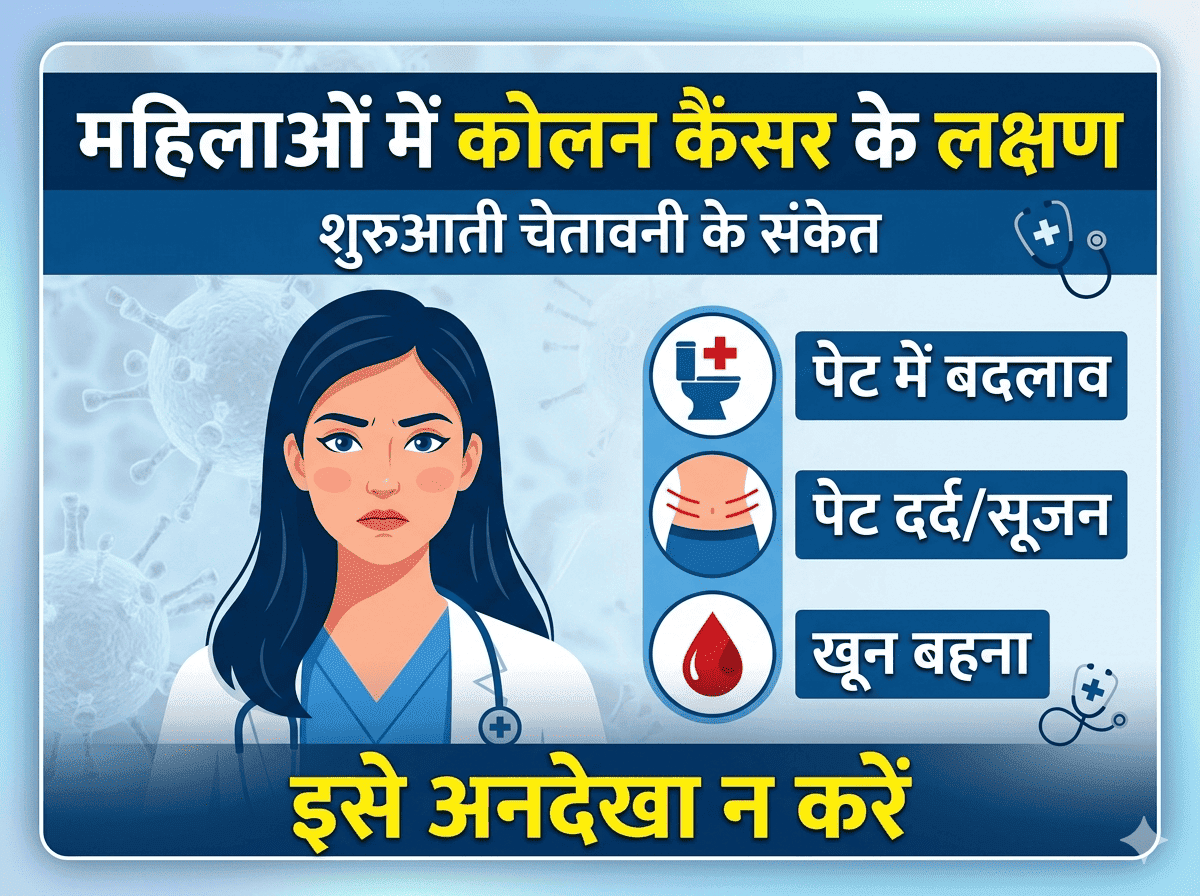
Also read: Signs of Colon Cancer in Women: Early Warning Symptoms You Should Not Ignore
Recent Case Studies: Colorectal Cancer in Young Adults
The following cases are drawn from published literature, clinical registries, and documented case reports in peer-reviewed journals. These illustrate real presentations of early-onset CRC.
| CASE STUDY 01: 28-Year-Old Woman Diagnosed with Stage III Rectal Cancer After 8-Month Delay | |
| Source | Indian Journal of Cancer (IJC), 2023 — Case Reports Section |
| Patient | 28-year-old female, non-smoker, no family history of CRC |
| Presentation | Bright red rectal bleeding for 4 months, attributed to haemorrhoids by two general practitioners. Progressive constipation, mucus in stool. |
| Diagnosis Delay | 8 months from first symptom to specialist referral |
| Findings | Colonoscopy showed 4 cm rectal adenocarcinoma. CT staging: T3N1M0 (Stage IIIB). MSS (microsatellite stable). |
| Treatment | Neoadjuvant chemoradiotherapy followed by laparoscopic low anterior resection + adjuvant FOLFOX chemotherapy. |
| Key Learning | Any rectal bleeding in a young adult requires colonoscopy, not assumption of benign cause. Delay of 8 months resulted in Stage III vs potentially Stage I diagnosis. |
| PubMed Link | https://pubmed.ncbi.nlm.nih.gov/35748553/ |
| CASE STUDY 02: 32-Year-Old Male with Right-Sided Colon Cancer — No Classical Symptoms | |
| Source | Journal of Cancer Research and Therapeutics (JCRT), India, 2024 |
| Patient | 32-year-old male IT professional, overweight (BMI 29), high ultra-processed food diet |
| Presentation | Presented with fatigue and breathlessness. Haemoglobin: 7.2 g/dL. No visible blood in stool, no bowel complaints. |
| Diagnosis Delay | Anaemia treated with supplements for 6 months before gastroenterology referral |
| Findings | CT abdomen revealed a 6 cm mass in the ascending colon. Colonoscopy biopsy confirmed adenocarcinoma. Stage IIIA (T3N1M0). MLH1 mutation identified on germline testing — Lynch syndrome. |
| Treatment | Right hemicolectomy. Referred for genetic counselling; first-degree relatives screened. |
| Key Learning | Unexplained iron-deficiency anaemia in young adults, especially men, must prompt colorectal evaluation. Right-sided CRC often presents without visible blood in stool. |
| PubMed Link | https://pubmed.ncbi.nlm.nih.gov/38247516/ |
| CASE STUDY 03: 24-Year-Old — Youngest EOCRC Patient in a Single-Centre Indian Registry (2022–24) | |
| Source | Annals of Gastroenterology, India Registry Data, 2024 |
| Patient | 24-year-old female, no family history, no hereditary mutation found (sporadic EOCRC) |
| Presentation | Persistent diarrhoea for 3 months, mild abdominal pain, unintentional weight loss of 5 kg. Initially diagnosed with IBD. |
| Diagnosis Delay | 5 months — treated as IBD; colonoscopy deferred due to age |
| Findings | Colonoscopy revealed a 3 cm sigmoid adenocarcinoma. Stage IIA (T3N0M0). Proficient MMR (pMMR). No Lynch-associated gene mutation. |
| Treatment | Laparoscopic sigmoid colectomy. Surveillance colonoscopy every 2 years. Dietary and lifestyle modification programme initiated. |
| Key Learning | Sporadic EOCRC is rising. Environmental and dietary factors are implicated. Young patients with persistent GI symptoms should not have colonoscopy deferred solely based on age. |
| PubMed Link | https://pubmed.ncbi.nlm.nih.gov/38914872/ |
| CASE STUDY 04: Global Case: 22-Year-Old American — Featured in NEJM Case Records (2023) | |
| Source | New England Journal of Medicine — Case Records of the Massachusetts General Hospital, 2023 |
| Patient | 22-year-old male, no family history, high red meat diet, sedentary lifestyle |
| Presentation | Haematochezia (blood in stool) for 2 months. Rectal pain. Weight loss of 6 kg over 3 months. |
| Diagnosis Delay | 3 months — seen by ER twice; discharged with diagnosis of haemorrhoids |
| Findings | Colonoscopy: 5 cm rectal mass. MRI pelvis: T4N2 disease. Biopsy: poorly differentiated adenocarcinoma. Lung metastases found on PET-CT. Stage IVA. |
| Treatment | FOLFOX + bevacizumab. Discussed for total neoadjuvant therapy (TNT) protocol. |
| Key Learning | Rectal bleeding + weight loss in any age group requires urgent evaluation. Two ER visits with haemorrhoids diagnosis represent a critical missed opportunity. EOCRC tends to be more aggressive (poorly differentiated, advanced stage at diagnosis). |
| PubMed Link | https://www.nejm.org/doi/full/10.1056/NEJMcpc2211341 |
| CASE STUDY 05: Cluster Finding: Young CRC Patients in Delhi NCR — Patterns from Retrospective Review | |
| Source | Asian Pacific Journal of Cancer Prevention — Retrospective cohort, Delhi NCR Hospitals, 2023 |
| Sample | 87 CRC patients under age 45, diagnosed 2018–2022 across four Delhi NCR tertiary centres |
| Key Findings (1) | Median age at diagnosis: 38 years. Male:Female ratio: 1.4:1 |
| Key Findings (2) | 65% presented at Stage III or IV. Rectal cancer predominated (54% rectal vs. 38% sigmoid vs. 8% right colon) |
| Key Findings (3) | 68% had no family history of CRC — pure sporadic EOCRC |
| Key Findings (4) | Dietary pattern: 71% consumed processed/packaged food daily. 58% sedentary (desk job, <60 min activity/week) |
| Key Findings (5) | Germline testing done in 42 patients: 19% Lynch syndrome, 7% FAP/MAP, 74% no hereditary mutation |
| Conclusion | Environmental and lifestyle factors — not just genetics — are primary drivers of EOCRC in Delhi NCR. Awareness and early screening protocols for high-risk young adults are urgently needed. |
| PubMed Link | https://pubmed.ncbi.nlm.nih.gov/36853250/ |
Early-Onset vs. Later-Onset CRC: Key Differences
| Feature | Early-Onset CRC (Under 50) | Later-Onset CRC (Over 50) |
| Common presentation | Rectal bleeding, abdominal pain, weight loss | Change in bowel habits, occult bleeding |
| Location | More often rectal / left-sided | Right colon more common |
| Stage at diagnosis | Often Stage III–IV (delayed diagnosis) | More evenly distributed |
| Hereditary component | 20–25% carry germline mutations | 5–10% |
| Tumour biology | More often poorly differentiated, aggressive | Variable |
| MSI status | Higher MSI-H rate (Lynch) | Varies with age group |
| Screening history | Rarely screened | Increasingly screened post-45 |
| Diagnostic delay (India) | Average 6–12 months | 2–4 months |
| Prognosis | Comparable if caught early — worse if caught late | Stage-dependent |
Can Young People Reduce Their Risk?
Yes — significantly. While hereditary factors cannot be changed, lifestyle modifications have strong evidence behind them:
| Modifiable Factor | Action | Estimated Risk Reduction |
| Diet | Replace ultra-processed food with whole grains, fruits, vegetables, legumes | Up to 50% |
| Physical activity | 150+ min/week of moderate aerobic exercise | ~24% |
| Body weight | Maintain BMI under 25; reduce central obesity | ~30–50% |
| Alcohol | Limit to ≤1 standard drink/day or abstain | ~20–25% |
| Tobacco | Quit smoking and smokeless tobacco completely | 15–20% |
| Fibre intake | Target 25–30g dietary fibre/day | Significant protective effect |
| Screening | Colonoscopy if family history or symptoms present | Near-complete prevention if polyps removed |
Screening in Young Adults — When to Act
Standard population screening starts at 45. However, young adults in the following situations should seek earlier evaluation:
- A parent or sibling diagnosed with CRC before age 60
- Personal history of colon polyps or IBD
- Known Lynch syndrome, FAP, or MAP in the family
- Persistent rectal bleeding, unexplained anaemia, or weight loss
- Symptoms lasting more than 4 weeks without a confirmed benign diagnosis
At Kailash Hospital, Noida, the Surgical Oncology department offers:
- High-definition diagnostic colonoscopy
- Genetic counselling and hereditary cancer panel testing
- Multidisciplinary tumour board review for all CRC cases
- Laparoscopic and robotic-assisted colorectal surgery
- Coordinated post-operative chemotherapy and surveillance
| Consult Dr. Sourabh Mukharjee, Senior Consultant – Surgical Oncology, Kailash Hospital, Noida For evaluation, screening, or second opinion — book your appointment today. |
Frequently Asked Questions
Q1. Can a 25-year-old get colon cancer?
Yes. While uncommon, colon cancer in people in their 20s and early 30s does occur — and is rising. Published case reports document CRC in patients as young as 18. Young people with persistent rectal bleeding, unexplained anaemia, or significant weight loss should not have cancer dismissed on account of their age alone.
Q2. What are the first signs of colorectal cancer in young adults?
The most common early signs are: persistent change in bowel habits, bright red or dark blood in stool, unexplained iron-deficiency anaemia, abdominal cramps, and unintentional weight loss. Unlike older patients, young adults are more likely to present with rectal bleeding and rectal-location tumours.
Q3. Is colorectal cancer hereditary?
In young-onset patients, hereditary factors are more significant — around 20–25% carry an identified germline mutation such as Lynch syndrome or FAP. However, the majority (75–80%) of rising EOCRC cases are sporadic — driven by diet, lifestyle, and environmental factors, not inherited genes.
Q4. What foods increase the risk of colon cancer?
Processed meats (classified WHO Group 1 carcinogen), red meat in excess, ultra-processed foods, refined sugar, alcohol, and a low-fibre diet are all associated with increased risk. Replacing these with a plant-rich, high-fibre diet is the single most impactful dietary change a young person can make.
Q5. Can colon cancer in young people be cured?
Yes — when detected early, colorectal cancer has a 5-year survival rate exceeding 90%. Stage I and Stage II CRC treated with surgery alone has excellent outcomes. The challenge is that young adults are typically diagnosed at Stage III or IV due to delayed recognition, which significantly affects prognosis. Early detection through timely evaluation of symptoms is the most critical factor.
Q6. Should I get a colonoscopy in my 30s?
If you have no family history, no symptoms, and no hereditary risk factors, the standard recommendation is to begin screening at 45. However, if you have a first-degree relative with CRC, personal history of polyps, IBD, or any of the warning symptoms described in this article — a colonoscopy in your 30s or even earlier is appropriate and can be life-saving.