When a deadly virus breaks out on a cruise ship carrying passengers from 23 countries, the world takes notice. The MV Hondius Hantavirus outbreak of 2026 is exactly that — a rare, alarming, and rapidly evolving public health event that has put global health agencies on high alert and sent millions of people searching for answers online.
This article covers everything about the cruise ship outbreak: what happened, where it spread, the latest news, and an interactive map of affected countries.
What Is MV Hondius?
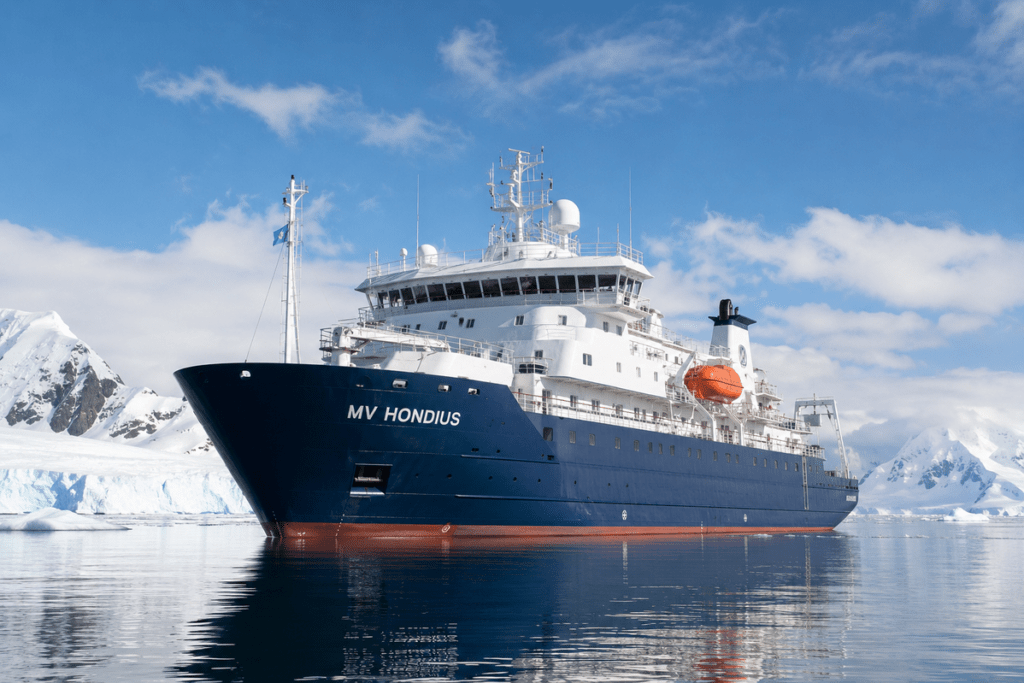
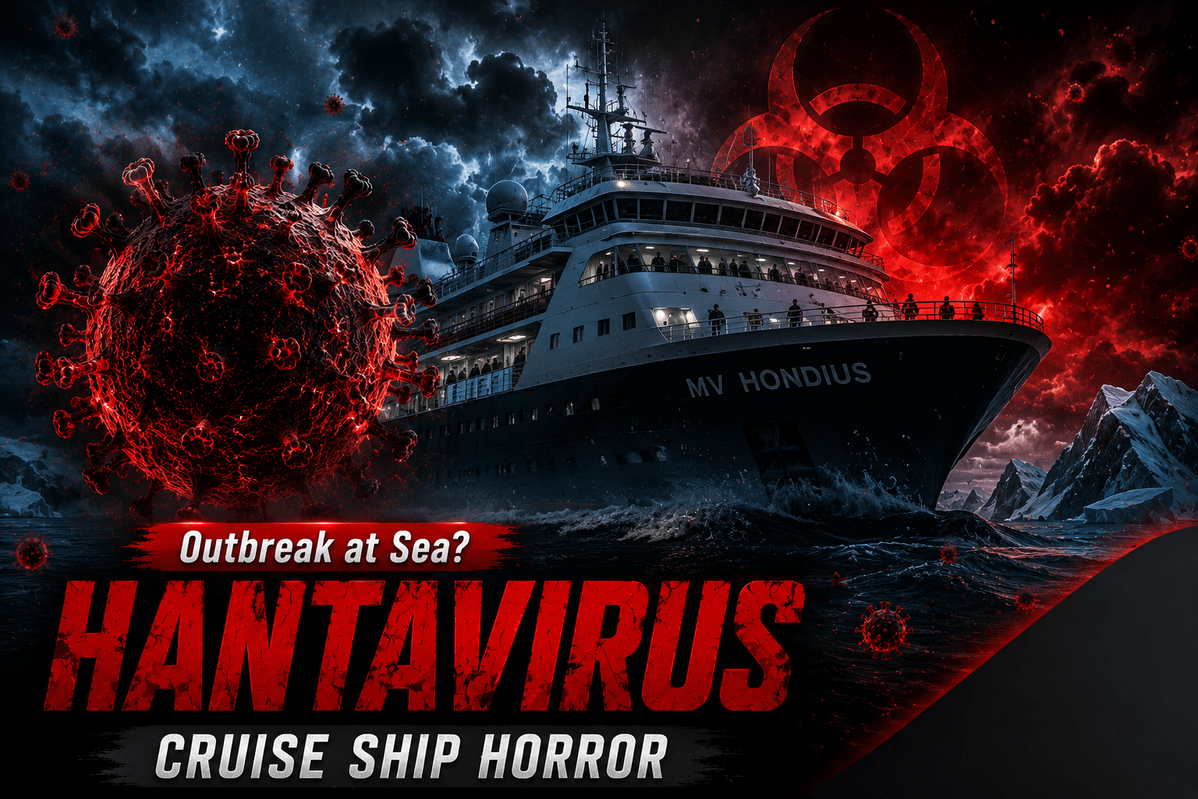
The MV Hondius is a Dutch-flagged expedition cruise ship operated by Oceanwide Expeditions, named after the 17th-century Dutch cartographer Jodocus Hondius. Built in 2019, the vessel is designed for polar and remote-destination expeditions, typically carrying between 170 to 190 passengers and crew.
On 1 April 2026, the ship departed from Ushuaia, Argentina — the southernmost city in the world — carrying 147 passengers and crew from 23 different nationalities. Its route was planned through Antarctica and remote South Atlantic islands including the Falkland Islands and Saint Helena.
What began as an adventure cruise ended as an international health emergency.
How Did the Hantavirus Outbreak Start on the Ship?
Health investigators believe the outbreak traces back to a single source — the index case, an elderly Dutch passenger who is thought to have been exposed to infected rodents before boarding the ship.
According to WHO and CDC investigations, this passenger had undertaken a months-long road trip through Argentina, Chile, and Uruguay in the weeks prior to boarding. These regions — particularly rural and forested areas of Patagonia — are known natural habitats for the Andes strain of Hantavirus, which is carried by the long-tailed pygmy rice rat (Oligoryzomys longicaudatus).
Hantavirus spreads to humans through inhalation of aerosols from infected rodent droppings, urine, or saliva. The passenger likely inhaled viral particles during outdoor activity on his pre-cruise road trip and boarded the ship already in the incubation phase — before any symptoms appeared.
The Andes Virus — Why This Outbreak Is Different
Not all Hantavirus strains behave the same way. The Andes virus — responsible for this outbreak — is the only known strain of Hantavirus capable of human-to-human transmission, making the confined setting of a cruise ship particularly concerning.
This transmission, however, requires prolonged and close contact with a symptomatic person — not the brief, casual interaction typical of shared spaces. Even so, the presence of an Andes virus case on a vessel with hundreds of passengers across multiple nationalities made isolation and containment critical.
Also Read : हंता वायरस क्या है? लक्षण, कारण, इलाज और बचाव की पूरी जानकारी
Complete Timeline — MV Hondius Hantavirus Outbreak
Here is the full chronological account of the outbreak as it unfolded:
1 April 2026 MV Hondius departs Ushuaia, Argentina. On board: 147 passengers and crew from 23 countries. Destination: Antarctica and remote South Atlantic islands.
Around 11 April 2026 The Dutch index case — an elderly male passenger — dies on board. His body is disembarked at Saint Helena on 24 April.
26 April 2026 His wife, who had been travelling with him, disembarks at Saint Helena and is transferred to Johannesburg, South Africa, where she passes away. She becomes the second fatality.
2 May 2026 The WHO is formally notified of a cluster of severe respiratory illness on board MV Hondius. At this point: 7 cases (2 confirmed, 5 suspected), 2 deaths. The ship is still at sea.
4 May 2026 A third death is reported on board. Case count remains at 7. WHO begins urgent investigation.
6 May 2026 WHO confirms the causative agent: Andes Hantavirus. This is the first confirmed shipboard outbreak of Andes virus in history. The ship sets course for Tenerife, Spain.
8 May 2026 WHO publishes its first Disease Outbreak News (DON599). Case count updated to 8 cases (6 confirmed, 2 probable). The CDC issues Health Alert Network advisory HAN00528, the highest-urgency communication level, alerting US clinicians to the outbreak.
9 May 2026 Case count rises to 10. Multinational evacuation planning begins. Airlines and health ministries across Europe and North America are notified.
10 May 2026 MV Hondius docks at Santa Cruz de Tenerife, Canary Islands, Spain. Full-scale evacuation begins. Passengers in full protective gear are disembarked and transported to designated isolation facilities and airports for repatriation.
11 May 2026 18 American passengers arrive at the University of Nebraska Medical Center (UNMC) in Omaha — one of the few US facilities with a dedicated biocontainment unit. One tests positive; another is symptomatic. France receives 13 passengers for monitoring.
12 May 2026 Total count: 11 confirmed or probable cases, 3 deaths. WHO officially assesses global public risk as LOW. No cases reported in India.
Also Read : Hantavirus Outbreak 2026: Symptoms, Cases, and Should India Be Worried?
Hantavirus Outbreak Map — Which Countries Are Affected?
The multi-nationality composition of MV Hondius means confirmed cases and monitored passengers are now spread across multiple countries.
Countries with confirmed cases or passengers under monitoring:
The ship carried passengers from 23 nationalities — monitoring continues across all countries where passengers have returned.
Is Hantavirus Spreading? WHO Says No
One of the most searched questions right now is: “Is Hantavirus spreading?”
The short, evidence-based answer is: No — not in the pandemic sense.
Here is what the data confirms:
All current cases are linked to MV Hondius. Every confirmed or probable case as of 12 May 2026 traces directly to the cruise ship. There’s no sign of community spread in any country.
The Andes virus does not spread like COVID-19. It requires prolonged, close contact — not brief or airborne transmission in open settings. Former FDA Commissioner Scott Gottlieb stated it clearly: “This is not going to spread like a pandemic virus, like COVID.”
WHO has not raised its risk level. The global public risk assessment remains LOW. No travel restrictions have been issued for any country.
Historical precedent supports containment. Every previous Andes virus outbreak — including a 2011 Chile cluster — remained localised and self-limiting once identified.
Expert Speak
Dr. Sanjay Mahajan, Sr. Consultant Physician & Intensivist, Kailash Hospital, Noida, offers perspective on the spreading concern:
“The worry people have is completely understandable — we have all lived through COVID-19. But Hantavirus behaves very differently. It does not float through the air in everyday environments. Every case in this outbreak is directly linked to one ship. The moment we see secondary community transmission in unrelated people, that changes the picture. We are not there, and health agencies are monitoring very closely to ensure we do not get there.”
Is There a Vaccine or Treatment for Hantavirus?
Vaccine: There is currently no WHO or FDA-approved vaccine for Hantavirus available globally. Research is ongoing but no licensed product exists.
Treatment: No specific antiviral drug has been approved. Treatment is supportive:
- Supplemental oxygen and mechanical ventilation for respiratory failure
- Careful fluid management
- ECMO (Extracorporeal Membrane Oxygenation) in critical cases — improves survival to approximately 80% when initiated early
The University of Nebraska Medical Center, where 18 American passengers were taken, is one of the world’s leading biocontainment facilities and has experience managing high-consequence pathogens.
What Should Travellers Know?
If you have recently returned from Argentina, Chile, or Uruguay, or were on board MV Hondius or a connecting flight with a confirmed case:
- Monitor yourself for fever, fatigue, body aches, and breathlessness for up to 42 days after potential exposure
- If symptoms develop, seek medical care immediately and inform your doctor of your travel history
- Do not wait for symptoms to worsen before presenting to a hospital — early intervention is critical
For the general Indian public with no South America travel history: no action is required beyond staying informed.
Frequently Asked Questions (FAQ)
Q1. What is the MV Hondius hantavirus outbreak? MV Hondius is a Dutch expedition cruise ship that departed Argentina in April 2026. An outbreak of Andes Hantavirus on board resulted in 11 confirmed or probable cases and 3 deaths as of 12 May 2026 — the first known shipboard outbreak of Andes virus in history.
Q2. Which countries are affected by the hantavirus cruise ship outbreak? Cases and monitored passengers are spread across the Netherlands, South Africa, USA, France, UK, Switzerland, Spain, and Germany. India has zero confirmed cases linked to this outbreak.
Q3. Is hantavirus spreading from person to person now? All current cases are directly linked to MV Hondius. There is no confirmed community spread in any country. The Andes virus requires prolonged close contact for human-to-human transmission — it does not spread through the air like COVID-19.
Q4. Where is the hantavirus outbreak located on a map? The outbreak originated on MV Hondius in the South Atlantic. Affected passengers have returned to Europe and North America — primarily the Netherlands, USA, France, and UK. South America (Argentina, Chile) remains the natural habitat of the Andes virus.
Q5. What is the latest news on hantavirus in 2026? As of 12 May 2026: 11 cases, 3 deaths, all linked to MV Hondius. WHO risk assessment: LOW. 18 American passengers are under monitoring at the University of Nebraska Medical Center. No community spread has been detected anywhere. India has zero cases.
Q6. Is there a hantavirus vaccine available? No. There is currently no WHO or FDA-approved vaccine for Hantavirus. Treatment is supportive, including oxygen therapy and ECMO in severe cases.
The Bottom Line
The MV Hondius Hantavirus outbreak is a serious but contained public health event. It is historic — the first known shipboard outbreak of Andes virus — and is being handled with full international coordination. The data, as of today, gives no reason to believe this will spread beyond those directly linked to the ship.
Stay informed, avoid rodent contact in rural or forested areas especially when travelling abroad, and consult a doctor immediately if you develop symptoms after travel to South America.