
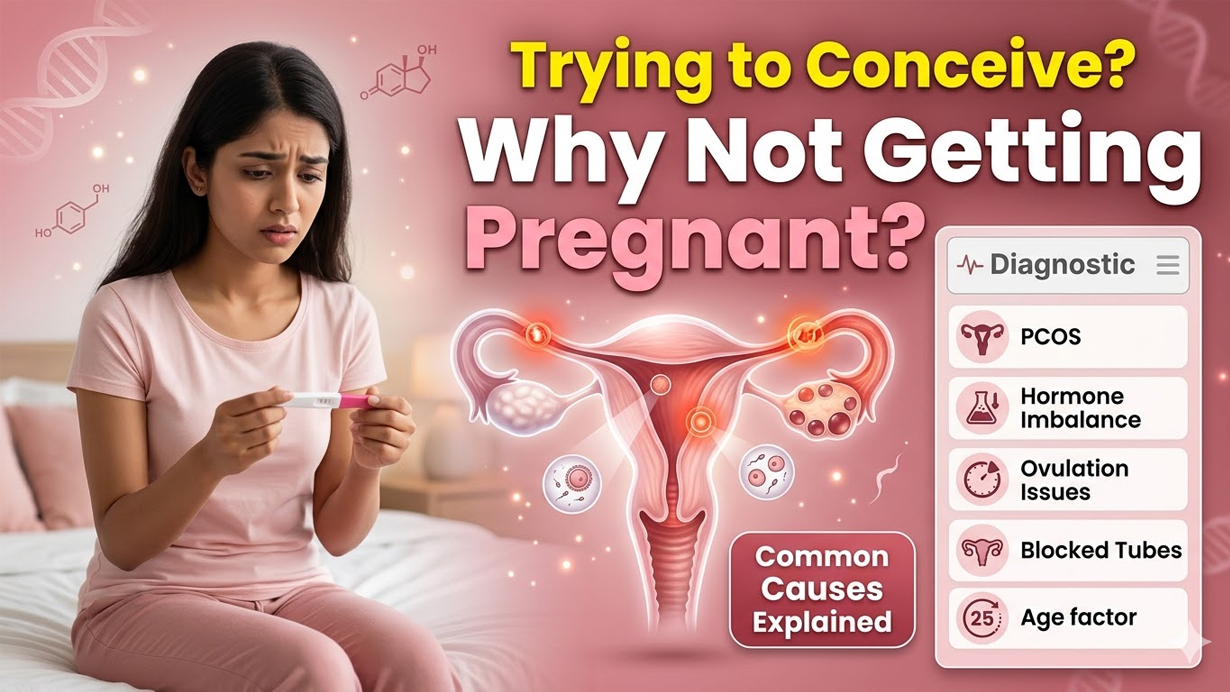
These days, many women living in cities face problems getting pregnant. Busy lifestyles, stress, and marrying late or planning pregnancy after 30 are some of the main reasons. If you are trying to have a baby and it’s not happening, you are not alone. This is a common issue, and the good news is that most of the time, it can be treated.
What is Infertility?
Dr. Chopra says a woman has infertility if she cannot get pregnant after 1 year of trying (having regular sex without using any birth control). If you are above 35 years old, this time is 6 months. If this is happening to you, it is important to see a doctor and find out the reason.
Common Reasons Why Pregnancy Does Not Happen
Here are some simple reasons why women face trouble getting pregnant:
1. Periods Not Being Regular (Ovulation Issues)
The biggest reason for infertility in women is that eggs are not released properly every month. This happens in conditions like PCOS. If your periods are irregular or you miss them often, this could be the reason.
2. PCOS (Polycystic Ovary Syndrome)
This is a very common problem today. Small cysts form in the ovaries, which stop eggs from coming out. Signs of PCOS include:
- Irregular periods
- Weight gain
- Extra hair on the face or body
- Acne
The good thing is that with the right treatment and small changes in eating habits, women with PCOS can get pregnant.
3. Blocked Tubes
The fallopian tubes are the path where the egg and sperm meet. If these tubes are blocked, pregnancy cannot happen. In India, infections like TB or past infections in the stomach area often cause this problem.
4. Endometriosis
This is a condition where the tissue that normally grows inside the uterus starts growing outside. It can cause a lot of pain during periods and make it hard to get pregnant.
5. Hormone Problems
Our body needs the right balance of hormones to get pregnant. If you have thyroid problems or high prolactin (a hormone), it can stop pregnancy.
6. Age Factor
As women get older, especially after 35, the quality and number of eggs start going down. This is nature’s way, and it becomes harder to get pregnant naturally.
Also Read :The Silent Conversation: What Your Monthly Cycle Says About Your Pregnancy Health
Lifestyle Reasons That Affect Pregnancy
Not just diseases, but our daily habits also matter a lot:
- Stress: Taking too much tension can upset your hormones.
- Eating Habits: Eating junk food and being overweight affects how your body works.
- Smoking and Drinking: These habits damage the eggs.
- No Exercise: Sitting all day and not moving your body is not good for fertility.
When Should You See a Doctor?
You should go to a fertility doctor if:
- You have been trying for 1 year, and nothing is happening.
- You are above 35 and have been trying for 6 months.
- Your periods are not regular.
- You have very bad pain during periods.
- You have had miscarriages in the past.
What Treatments Are Available?
Doctors today have many ways to help you get pregnant:
- Medicine: To help release eggs from the ovaries.
- IUI: A simple process where healthy sperm is placed inside the uterus.
- IVF: When eggs and sperm are mixed in a lab to make an embryo and then placed in the uterus. This is for complex cases.
- Surgery: To fix blocked tubes, fibroids, or endometriosis.
Final Thoughts
If you are wondering, “Why am I not getting pregnant?”, do not lose hope. Infertility is a common problem, and it is treatable. The most important thing is to see a good doctor early, find out the reason, and start the right treatment. With today’s medical science and expert doctors, many women are becoming mothers. If you are looking for the right support, you can visit Kailash IVF and talk to their specialists who guide you every step of the way. All you really need is the right guidance at just the right time.