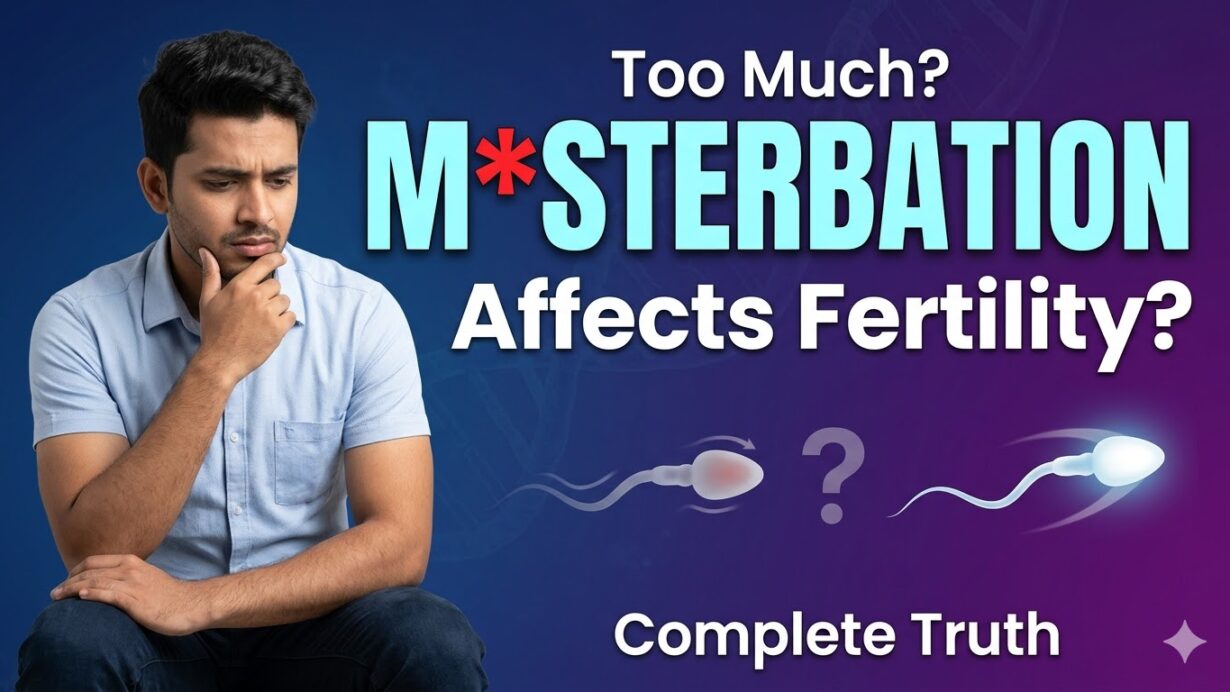
Behind closed doors, this question troubles countless men. Some hesitate to bring it up with their partners. Others avoid asking their doctor altogether, embarrassed by what they fear might be the answer.
How the Male Body Actually Works
Let us clear up the biggest misunderstanding first. The male body does not have a limited lifetime supply of sperm. Unlike women, who are born with all the eggs they will ever have, men produce fresh sperm continuously from adolescence through old age.
Every day, the testicles manufacture millions of new sperm cells. This production line never stops. When a man ejaculates, he is not dipping into a finite reservoir. He is simply releasing what has been produced recently.
“Many men worry that frequent ejaculation will eventually deplete their sperm stores permanently,” says Dr. Sakshi Chopra, Consultant IVF, Kailash Deepak Hospital. “That is simply not how male reproductive biology works. The body is designed to produce sperm constantly. There is no such thing as running out.”
What Changes with Frequent Ejaculation
If the body never runs out of sperm, why do some people believe frequent masturbation harms fertility? The answer lies in understanding concentration versus total production.
When a man ejaculates several times in a single day, each subsequent release may contain fewer sperm than the first. The body needs time to transport newly produced sperm from the testicles to the seminal vesicles. If releases happen too close together, the quantity per ejaculate temporarily drops.
However, this is a short-term effect. Give the body 24 to 48 hours, and sperm counts return to normal levels. No permanent damage occurs.
What Fertility Specialists Actually Look For
When fertility experts evaluate a man’s reproductive health, they focus on three specific measurements.
The first is sperm count—how many sperm are present in a sample. The second is motility—how well those sperm move. The third is morphology—whether the sperm are shaped correctly to reach and penetrate an egg.
Frequent ejaculation may temporarily reduce count, but it does not damage motility or morphology. In fact, for some men with certain fertility issues, shorter abstinence periods actually improve the quality of their sperm.
Also Read :Trying to Conceive? Discover the Perfect Timing for Sex (IVF Insights)
When Abstinence Becomes Counterproductive
Many people assume that holding in sperm for a long time improves fertility. This is not always true.
Research shows that abstinence beyond seven to ten days can lead to increased sperm DNA fragmentation. The sperm that have been stored for too long may become damaged by free radicals. Their swimming ability may also decline.
For couples trying to conceive, the sweet spot is usually between two and five days of abstinence. This allows an adequate sperm count while keeping the sperm fresh and healthy.
The Real Threats to Male Fertility
- While frequent masturbation does not cause infertility, other factors certainly do. These are the areas men should pay attention to if they are concerned about their fertility.
- Heat is a major factor. The testicles work most effectively at temperatures that are just a bit cooler than the body’s normal temperature. Frequent hot tub use, tight underwear, or sitting with a laptop on the lap for hours can temporarily reduce sperm production.
- Lifestyle habits also matter. Smoking cigarettes significantly lowers sperm count and damages sperm DNA. Heavy alcohol consumption has similar effects. Obesity disrupts hormone balance, affecting both sperm production and quality.
- Chronic stress is another overlooked factor. When stress levels remain high for extended periods, cortisol rises and testosterone often falls. This combination can impair sperm production.
What a Semen Analysis Reveals
The most direct way to understand male fertility is through a semen analysis. This straightforward test examines a sample under a microscope to assess count, movement, shape, and other characteristics.
For men who have been trying to conceive without success for several months, a semen analysis provides clear answers. It removes guesswork and replaces it with data.
The Bottom Line
So, does frequent masturbation reduce fertility in men?
The complete truth is straightforward: no, it does not. It may cause a temporary dip in sperm concentration when releases happen very close together, but this effect reverses within a day or two. It does not cause permanent infertility, nor does it damage sperm quality.
What truly matters for male fertility is overall health—managing heat exposure, avoiding smoking and excessive alcohol, maintaining a healthy weight, reducing chronic stress, and getting proper medical evaluation when needed.
If you and your partner have been trying to conceive without success, the most productive step is not self-blame. It is seeking clarity through proper testing and expert guidance.