

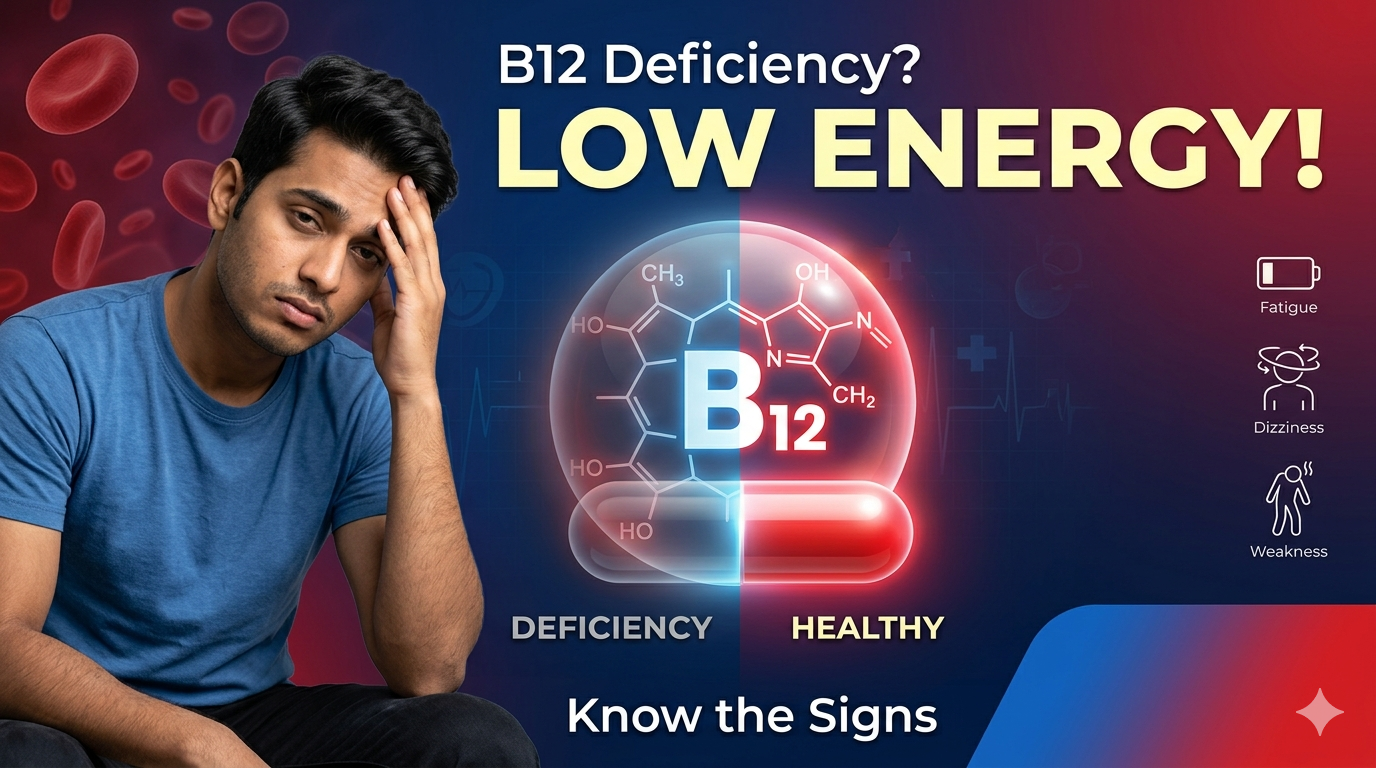
You are eating right, sleeping enough, and exercising regularly — yet something still feels off. A persistent tiredness you cannot shake, a strange tingling in your fingers, or a brain fog that clouds your thinking midway through the day. A lot of folks tend to dismiss these issues as just stress or a part of getting older. But in a surprising number of cases, these are the early, easily-missed signs of Vitamin B12 deficiency — a condition that is far more common than most people realise, and far more damaging when left unaddressed.
B12 deficiency does not announce itself loudly. It creeps in quietly, mimicking other conditions, and by the time it causes noticeable harm — particularly to the nervous system — significant damage may already have occurred. This guide walks you through what B12 actually does in your body, the warning signs you should never ignore, who is most at risk, and what you can do about it.
What Is Vitamin B12 and Why Does Your Body Need It?
Vitamin B12 — also known as cobalamin — is a water-soluble vitamin that plays a central role in some of the body’s most essential functions. It is required for the production of healthy red blood cells, the synthesis of DNA, and crucially, the maintenance of the myelin sheath — the protective coating that surrounds nerve fibres and allows nerve signals to travel efficiently.
Unlike some nutrients the body can produce on its own, B12 must be obtained entirely through diet or supplementation. It is found naturally in animal-based foods — meat, fish, poultry, eggs, and dairy products. This is why certain groups, including vegetarians, vegans, and the elderly, are at a heightened risk of running low on this critical nutrient.
When B12 levels drop, the ripple effects touch virtually every organ system. The consequences range from anaemia and fatigue to irreversible neurological damage — making early identification and treatment essential.
Who Is Most at Risk of Vitamin B12 Deficiency?
B12 deficiency is not random. Certain lifestyle choices, health conditions, and demographic factors significantly raise the odds. Getting a clear picture of your personal risk profile is the crucial first step in prevention.
Dietary Patterns
Vegetarians and vegans are among the most vulnerable groups. Since B12 occurs almost exclusively in animal products, a plant-based diet — however nutritionally balanced in other ways — provides little to no B12 unless fortified foods or supplements are included deliberately.
Digestive and Absorption Issues
The body’s ability to absorb B12 depends on a protein called intrinsic factor, produced in the stomach. Conditions like atrophic gastritis, Crohn’s disease, celiac disease, or a history of bariatric surgery can all impair intrinsic factor production or disrupt gut absorption, leading to deficiency even when dietary intake appears adequate.
Age-Related Decline
Stomach acid production naturally decreases with age, which reduces the body’s capacity to free B12 from food proteins. Adults over 50 are therefore at substantially greater risk, even those who consume B12-rich diets regularly.
Certain Medications
Long-term use of metformin (a common diabetes medication) and proton pump inhibitors (PPIs) — taken for acid reflux — are both known to interfere with B12 absorption. People on these medications for extended periods should have their B12 levels monitored routinely.
“B12 deficiency is one of those conditions that quietly accumulates damage over months — even years — before a patient walks into my clinic with clear complaints. By then, some of the neurological effects may already be difficult to reverse. That is why I always stress the importance of proactive screening, particularly for patients above 50, those on long-term metformin, or individuals following strict vegetarian or vegan diets. A simple blood test can catch this early, and early treatment makes a world of difference.”
— Dr. Sanjay Mahajan, Sr. Consultant Physician & Intensivist, Kailash Hospital, Noida
10 Key Signs of Vitamin B12 Deficiency You Should Not Overlook
The symptoms of B12 deficiency are deceptively varied, which is part of why it so often goes undiagnosed. They span the neurological, psychological, haematological, and digestive systems. Here is what to watch for:
1. Persistent, Unexplained Fatigue
Fatigue is the most commonly reported symptom of b12 deficiency, and it is often the first sign. When B12 levels fall, the body cannot produce enough healthy red blood cells to transport oxygen efficiently. The result is a type of anaemia that leaves patients feeling profoundly tired regardless of how much they rest. This is not ordinary tiredness — it is a bone-deep exhaustion that does not improve with sleep.
2. Tingling, Numbness, or “Pins and Needles”
One of the more alarming and diagnostically important signs is a tingling or numb sensation in the hands, feet, or legs. This occurs because B12 is essential for maintaining the myelin sheath around nerve fibres. Without adequate B12, nerve conduction becomes impaired — a condition known as peripheral neuropathy. Left untreated, the nerve damage can become permanent.
3. Cognitive Difficulties and Memory Problems
Difficulty concentrating, forgetfulness, slowed thinking, and mental fog are all documented neurological effects of prolonged Vitamin B12 Deficiency. In older adults, these symptoms can sometimes be mistaken for early dementia. Research has consistently linked low B12 levels with accelerated cognitive decline, making this a particularly important marker to track in elderly patients.
4. Mood Changes — Depression and Irritability
Vitamin B12 plays a direct role in the synthesis of serotonin and dopamine — the brain’s primary mood-regulating neurotransmitters. When B12 is deficient, serotonin production dips, and patients frequently report low mood, increased irritability, anxiety, and in more severe cases, clinical depression. Notably, some patients with treatment-resistant depression have been found to have undiagnosed Vitamin B12 Deficiency.
5. Pale or Slightly Yellowish Skin
When the body lacks B12 vitamins, red blood cells become abnormally large and fragile — a condition called megaloblastic anaemia. These cells break down more easily, releasing a pigment called bilirubin into the bloodstream. This can give the skin a pale or faintly jaundiced (yellowish) appearance, particularly noticeable in the whites of the eyes.
6. A Swollen or Inflamed Tongue (Glossitis)
Glossitis — inflammation of the tongue — is a lesser-known but surprisingly reliable indicator of B12 deficiency. The tongue may appear red, swollen, and smooth (losing its normal bumpy texture), and the condition is often accompanied by a burning or soreness in the mouth. Angular stomatitis — painful cracks at the corners of the mouth — may also occur.
7. Shortness of Breath and Dizziness
As anaemia worsens, the heart has to work harder to compensate for low oxygen levels in the blood. This extra cardiovascular strain can cause palpitations, lightheadedness, and breathlessness — sometimes even during mild physical activity. If you find yourself winded by activities that previously felt effortless, a B12 level check is warranted.
8. Vision Disturbances
In rare but serious cases, B12 deficiency can damage the optic nerve — the nerve that transmits visual information from the eye to the brain. This can result in blurred or double vision, sensitivity to light, and in advanced cases, a gradual loss of central vision. This condition, known as optic neuropathy, underscores the critical importance of timely diagnosis.
9. Balance and Coordination Problems
When nerve damage from B12 deficiency extends to the spinal cord — a condition called subacute combined degeneration — patients may experience difficulty walking, poor balance, and coordination problems. This is more likely to develop in long-standing, untreated deficiency and represents one of the most serious potential consequences.
10. Digestive Complaints
Nausea, constipation, diarrhoea, and a general loss of appetite can all be associated with vitamin B12 deficiency. These symptoms arise partly because B12 supports the healthy functioning of the digestive tract’s mucosal lining. Some patients also report unexplained weight loss alongside these gastrointestinal symptoms.
How Is Vitamin B12 Deficiency Diagnosed?
Diagnosing B12 deficiency is relatively straightforward once a clinician suspects it. A comprehensive blood panel typically includes:
- Serum B12 level — the primary diagnostic test, though it has limitations and should be interpreted alongside clinical symptoms
- Complete Blood Count (CBC) — to detect megaloblastic anaemia characterised by enlarged red blood cells (macrocytosis)
- Methylmalonic acid (MMA) and homocysteine levels — elevated levels are sensitive markers of functional B12 deficiency, even when serum B12 appears borderline normal
- Intrinsic factor antibody test — to rule out pernicious anaemia, an autoimmune condition that prevents B12 absorption
At Kailash Hospital, Noida, patients presenting with fatigue, neurological symptoms, or unexplained anaemia undergo a structured diagnostic workup designed to identify the underlying cause quickly — because in B12 deficiency, delay in diagnosis directly translates to preventable harm.
Also Read : रोज़ाना पपीता खाने के फायदे और नुकसान
Treatment Options: From Injections to Dietary Adjustments
The treatment approach for Vitamin B12 Deficiency depends on its underlying cause and severity.
Intramuscular Injections
For patients with absorption problems — such as those with pernicious anaemia, atrophic gastritis, or post-bariatric surgery — oral supplements are ineffective because the gut cannot absorb B12 adequately. In these cases, intramuscular injections of cyanocobalamin or hydroxocobalamin are the treatment of choice. Initial treatment is typically intensive (daily injections for two weeks), followed by maintenance injections every three months.
High-Dose Oral Supplementation
For patients whose deficiency is dietary in origin — vegetarians, vegans, or those with mild absorption issues — high-dose oral B12 supplementation (typically 1000–2000 mcg daily) can be effective. Even without intrinsic factor, a small percentage of B12 is absorbed through passive diffusion, meaning high doses can compensate.
Dietary Adjustments
Increasing dietary intake of B12-rich foods — organ meats, clams, salmon, eggs, and dairy products — supports replenishment in those with dietary deficiency. Fortified plant-based foods (such as B12-fortified plant milks or cereals) are viable options for vegetarians and vegans.
Prevention: How to Keep Your B12 Levels in a Healthy Range
For most people, preventing Vitamin B12 Deficiency is achievable with consistent dietary habits and, where needed, targeted supplementation. Here are evidence-based strategies:
- Include B12-rich foods in your daily diet — eggs, dairy, meat, and seafood are excellent sources
- If you follow a vegetarian or vegan lifestyle, supplement with B12 proactively rather than waiting for symptoms to appear
- If you are above 50, ask your physician about routine B12 screening — absorption naturally declines with age
- If you take metformin or PPIs long-term, discuss B12 monitoring with your doctor at your next appointment
- Pregnant women should ensure adequate B12 intake, as deficiency during pregnancy is linked to neural tube defects and developmental issues in the infant
- Do not self-diagnose — if you suspect deficiency, get tested. Supplementing without a diagnosis can mask other conditions, including B12-related anaemia
Why Early Detection of Vitamin B12 Deficiency Is Non-Negotiable
The stakes of delayed diagnosis are genuinely high. While haematological symptoms (anaemia, fatigue) respond well to treatment at any stage, the neurological damage caused by Vitamin B12 Deficiency does not always fully reverse. The longer peripheral neuropathy or spinal cord involvement goes untreated, the greater the chance of permanent nerve damage.
Additionally, chronically elevated homocysteine — a direct consequence of Vitamin B12 Deficiency — is an independent risk factor for cardiovascular disease, stroke, and blood clots. Getting B12 levels back to normal not only resolves the immediate symptoms but also reduces these longer-term risks.
Early detection truly changes outcomes. A blood test that takes minutes can catch a deficiency before it causes lasting harm — making it one of the simplest, most cost-effective interventions in preventive medicine.
When Should You See a Doctor?
If you are experiencing any combination of the following, it is time to seek medical evaluation without delay:
- Fatigue that persists despite adequate sleep and rest
- Tingling, numbness, or weakness in your hands, arms, legs, or feet
- Noticeable memory lapses, difficulty concentrating, or sudden mood changes
- Unexplained weight loss or persistent digestive discomfort
- Pale skin or yellow tinge to the eyes
- Difficulty with balance or walking
At Kailash Hospital, our Department of General Medicine and Internal Medicine offers comprehensive evaluation for nutritional deficiencies, including structured blood panel testing and specialist-led consultation. Dr. Sanjay Mahajan and his team take a patient-centred approach — diagnosing the root cause of symptoms rather than simply treating the surface complaint.
Conclusion: Small Nutrient, Big Consequences — Act Before It Escalates
Vitamin B12 deficiency sits at a curious intersection: it is among the most preventable and treatable nutritional conditions in medicine, yet also among the most frequently missed — particularly in its early stages. The signs are often subtle, easily dismissed, or attributed to something else entirely. That is precisely what makes awareness so vital.
Whether you are a young vegetarian, a middle-aged adult on diabetes medication, or an older individual noticing cognitive changes, the message is the same: do not wait for symptoms to worsen. A straightforward blood test can tell you exactly where you stand — and if a deficiency is found, treatment is highly effective when started early.
Book a Consultation at Kailash Hospital, Noida
If you are experiencing any of the symptoms described in this article, or belong to a high-risk group for Vitamin B12 Deficiency, speak with a specialist today. The team at Kailash Hospital, Noida — led by experienced physicians like Dr. Sanjay Mahajan — is equipped to evaluate, diagnose, and treat nutritional deficiencies with precision and care.
Your health deserves more than guesswork. Get tested. Get answers.






















Leave a Reply