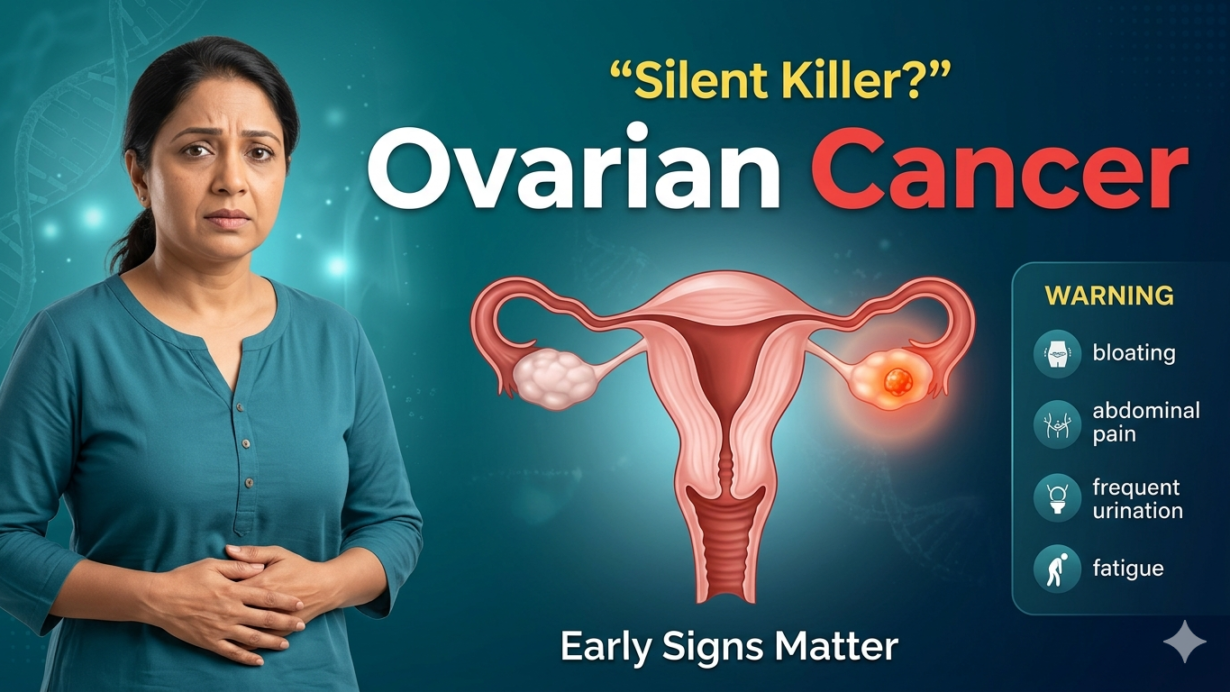
In the bustling rhythm of life, where we meticulously plan careers, family gatherings, and future investments, how often do we truly pause to listen to our bodies, especially when they whisper subtle signs of distress? For women, this introspection is paramount, particularly concerning a formidable adversary known as ovarian cancer. Often termed the “silent killer,” ovarian cancer frequently evades early detection, presenting with vague symptoms that can be easily dismissed as minor ailments or everyday discomforts.
However, silence does not equate to absence. It merely means we need to tune in more closely. Understanding the early, often subtle, clues of ovarian cancer isn’t just about gaining knowledge; it’s about empowerment, proactive health management, and potentially life-saving action. In India, where cultural nuances sometimes deter open discussions about women’s reproductive health, breaking this silence becomes even more critical.
This comprehensive guide aims to shed light on ovarian cancer, demystify its nature, identify its early indicators, and empower every woman to become her own health advocate. We will delve into insights from medical experts, including Dr. Sujata Bhat, Senior Consultant, Obstetrics & Gynecology at Kailash Hospital, Noida, to equip you with the knowledge needed to recognize the whispers before they become roars.
What is Ovarian Cancer and Why is it So “Silent”?
Ovarian cancer is a type of cancer that begins in the ovaries, the small, almond-shaped organs located on each side of the uterus that produce eggs and female hormones (estrogen and progesterone). There are several types of ovarian cancer, with epithelial ovarian cancer (which starts on the outer surface of the ovary) being the most common.
The “silent” reputation of ovarian cancer stems from a combination of factors:
- Vague Symptoms: Unlike some cancers that cause distinct, noticeable lumps or clear pain, ovarian cancer symptoms are often non-specific and mimic common, less serious conditions like indigestion, irritable bowel syndrome (IBS), or even premenstrual syndrome (PMS).
- Anatomical Location: The ovaries are deep within the abdominal cavity, providing ample space for tumors to grow significantly before they start pressing on other organs or causing noticeable discomfort.
- Lack of Early Screening Tests: Unfortunately, there is no universally effective screening test for ovarian cancer in asymptomatic women, similar to mammograms for breast cancer or Pap tests for cervical cancer. While transvaginal ultrasounds and CA-125 blood tests exist, they are not sensitive or specific enough for routine screening of the general population.
Dr. Sujata Bhat explains, “The primary challenge with ovarian cancer is its insidious onset. By the time symptoms become pronounced enough for a woman to seek medical help, the cancer has often advanced to later stages. This is why awareness of even the mildest, persistent symptoms is absolutely crucial.”
Deciphering the Early Clues: What to Watch For
While there might not be a single definitive “early warning sign,” a cluster of persistent symptoms that are new to you, occur frequently (more than 12 times a month), and don’t resolve with typical remedies, should prompt a visit to your doctor. These are often referred to as the ‘BEAT’ symptoms or the “triad” of symptoms:
- Bloating: Persistent, rather than intermittent, abdominal bloating that doesn’t go away, often accompanied by a feeling of fullness even after eating small amounts. This isn’t your usual menstrual bloating; it’s more constant and noticeable.
- Eating Difficulties or Feeling Full Quickly: An unusual inability to eat much, feeling full very fast, or experiencing indigestion, nausea, or loss of appetite.
- Abdominal or Pelvic Pain: Persistent pain or discomfort in the lower abdomen or pelvis, which can range from a dull ache to sharp cramps. This isn’t cyclical menstrual pain but rather new and persistent.
- Urinary Symptoms: A frequent or urgent need to urinate, or other changes in bladder habits.
Other symptoms that may accompany these include:
- Changes in bowel habits (constipation or diarrhea)
- Unexplained weight loss or gain
- Extreme fatigue
- Back pain
- Pain during intercourse
- Abnormal vaginal bleeding (especially post-menopausal)
Dr. Bhat advises, “It’s vital for women, especially those over 40, to be attuned to their bodies. If you experience any of these symptoms persistently for several weeks, do not self-diagnose or delay consulting a gynecologist. While they might be caused by benign conditions, ruling out ovarian cancer is paramount.”
Also Read :Trying to Conceive? Discover the Perfect Timing for Sex (IVF Insights)
Understanding Your Risk Factors
While ovarian cancer can affect any woman, certain factors can increase your risk. Being aware of these can help you have a more informed discussion with your doctor:
- Age: The risk increases with age, with most cases diagnosed in women over 50, particularly after menopause.
- Family History: A strong family history of ovarian, breast, or colorectal cancer significantly increases risk. This is particularly true if close relatives (mother, sister, daughter) have had ovarian cancer, or if there’s a known family history of BRCA1 or BRCA2 gene mutations.
- Genetic Mutations: Inherited mutations in genes like BRCA1, BRCA2, and those associated with Lynch syndrome account for a significant percentage of ovarian cancers.
- Endometriosis: A condition where tissue similar to the lining of the uterus grows outside the uterus has been linked to a slightly increased risk of certain types of ovarian cancer.
- Obesity: Research indicates a connection between obesity and a higher risk.
- Reproductive History:
- Never having been pregnant or having fertility issues.
- Using fertility treatments (though this link is still under research).
- Hormone Replacement Therapy (HRT): Long-term use of estrogen-only HRT after menopause.
Dr. Sujata Bhat emphasizes, “Knowing your family history is one of the most powerful tools in risk assessment. If you have a strong family history of related cancers, genetic counseling and testing might be appropriate to understand your personalized risk profile.”
Diagnosis: The Path to Clarity
If you present with suspicious symptoms, your doctor will likely recommend a combination of tests:
- Pelvic Exam: A thorough manual examination of the uterus, ovaries, and bladder.
- Transvaginal Ultrasound (TVS): An imaging test that uses sound waves to create pictures of the uterus, fallopian tubes, and ovaries. It can detect masses or abnormalities.
- CA-125 Blood Test: CA-125 is a protein that is often elevated in the blood of women with ovarian cancer. However, it can also be elevated due to benign conditions (like endometriosis, fibroids, or even menstruation), so it’s not a definitive diagnostic tool on its own. It’s particularly helpful for keeping an eye on how well treatment is working or if there’s a chance of it coming back.
- CT Scan or MRI: These advanced imaging tests provide detailed pictures of abdominal and pelvic organs, helping to determine the size and extent of any tumors and if cancer has spread.
- Biopsy (through surgery): The only definitive way to diagnose ovarian cancer is by surgically removing tissue (usually part or all of the ovary) and examining it under a microscope. This is often done via laparoscopy or open surgery.
“Getting an early and accurate diagnosis is absolutely essential for effective treatment,” states Dr. Bhat. “While awareness is growing, particularly in metropolitan areas like Delhi-NCR, access to early diagnostic tools remains crucial. We encourage women not to shy away from necessary investigations.”
Practical Tips for Proactive Ovarian Health
Empowerment comes from action. Here are practical steps you can take:
- Listen to Your Body: Pay attention to persistent changes, especially the BEAT symptoms. Don’t dismiss them.
- Regular Gynecological Check-ups: Even without specific screening tests, regular visits to your gynecologist allow for discussions about your health, family history, and any new symptoms.
- Discover Your Family Health History: Have conversations with your relatives about their health backgrounds. If there’s a pattern of cancers, discuss this with your doctor.
- Maintain a Healthy Lifestyle: A balanced diet rich in fruits, vegetables, and whole grains, combined with regular physical activity, can contribute to overall health and may help reduce cancer risk. Avoiding obesity is also important.
- Consider Oral Contraceptives (in consultation with your doctor): For some women, long-term use of oral contraceptives has been shown to reduce the risk of ovarian cancer. Discuss this option with your doctor.
- Childbearing and Breastfeeding: Pregnancy and breastfeeding are associated with a reduced risk of ovarian cancer.
- Surgical Options (for high-risk individuals): For women with very high genetic risk (e.g., BRCA mutations), prophylactic oophorectomy (surgical removal of the ovaries and fallopian tubes) after childbearing can significantly reduce risk. This is a major decision to be made in close consultation with an oncologist and a genetic counselor.
- Advocate for Yourself: If you think your concerns aren’t being taken seriously, don’t hesitate to get a second opinion. Your health is your priority.
- Spread Awareness: Talk to other women – your friends, sisters, mothers, and daughters – about the importance of being aware of ovarian cancer symptoms. Women’s health initiatives, similar to those seen in Mumbai, are vital in educating the public.
Conclusion: Breaking the Silence, Building a Healthier Future
Ovarian cancer, despite its silent nature, is not invincible. By understanding its subtle early clues, acknowledging risk factors, and proactively engaging with healthcare professionals, we can shift the narrative. No woman should feel alone or uninformed in this battle.
As Dr. Sujata Bhat eloquently puts it, “Our goal as healthcare providers is not just to treat disease, but to prevent it, and in the case of ovarian cancer, early detection is our strongest preventive measure. Women’s health is a collective responsibility, and by empowering ourselves with knowledge, we create a healthier future for all.”