
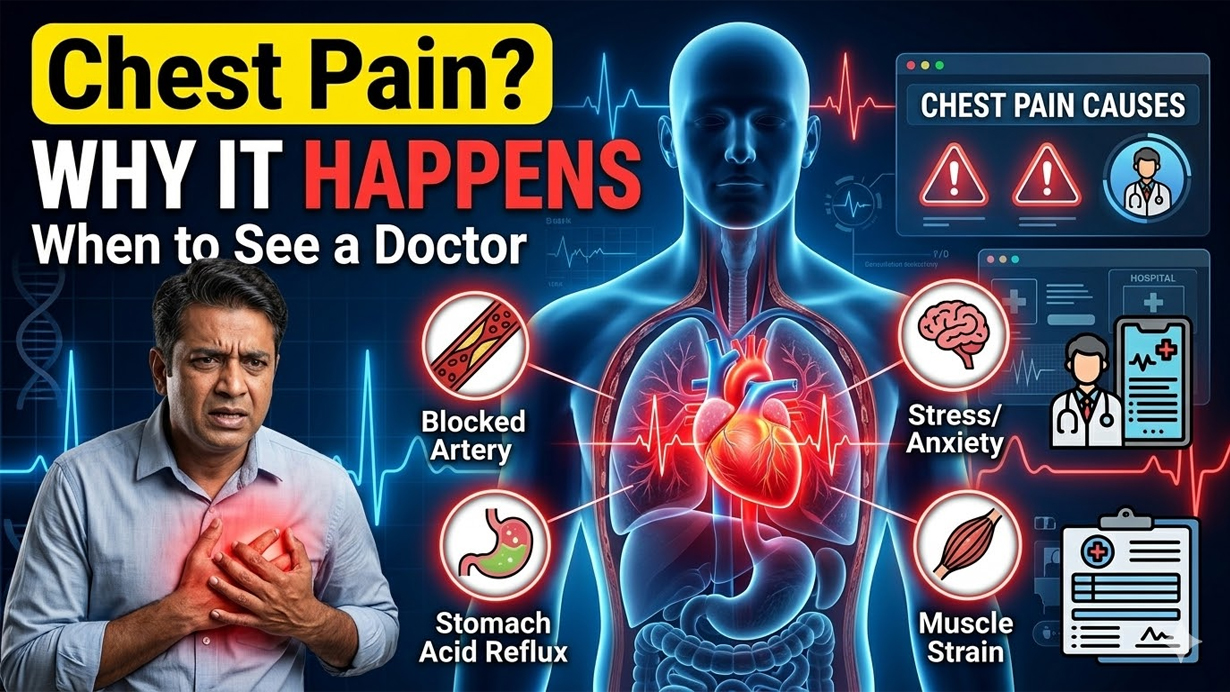
Chest pain is one of the most concerning symptoms a person can experience. Many people immediately associate chest pain with a heart attack, but the reality is that chest pain can occur due to a variety of medical conditions, ranging from mild digestive issues to serious heart problems. Understanding the causes of chest pain and recognizing warning signs can help individuals seek timely medical care and prevent complications.
Chest pain may feel like pressure, tightness, burning, or discomfort in the chest area. It can also spread to other parts of the body such as the neck, jaw, shoulders, arms, or back. In some cases, chest pain may appear suddenly, while in others it may develop gradually.
According to Dr. D.S. Mathur, identifying the underlying cause of chest pain is essential because it may signal a potentially serious health condition.
“Chest pain should never be ignored, especially if it occurs suddenly or is accompanied by symptoms like breathlessness or dizziness. Early medical evaluation can help detect serious heart conditions,” explains Dr. D.S. Mathur.
Experts at Kailash Hospital recommend seeking medical advice whenever chest pain is severe, persistent, or unexplained.
Common Causes of Chest Pain
Chest pain can originate from different organs in the body, including the heart, lungs, muscles, digestive system, or even the nerves. Understanding the possible causes helps determine whether the condition requires urgent medical attention.
1. Heart-Related Causes
Heart conditions are among the most serious causes of chest pain. Reduced blood flow to the heart muscles can lead to discomfort or pressure in the chest.
Coronary Artery Disease
Coronary artery disease occurs when the arteries supplying blood to the heart become narrowed or blocked due to cholesterol deposits. This can cause chest pain known as angina.
Heart Attack
A heart attack happens when the blood flow to a section of the heart gets completely cut off. Chest pain associated with a heart attack is usually intense and may spread to the left arm, neck, or jaw.
Pericarditis
Pericarditis refers to inflammation of the sac surrounding the heart. This condition may cause sharp chest pain that worsens with deep breathing or lying down.
2. Digestive System Problems
The digestive system can also cause chest discomfort that may resemble heart-related pain.
Acid Reflux or GERD
Gastroesophageal reflux disease (GERD) occurs when stomach acid flows back into the esophagus, causing a burning sensation in the chest often referred to as heartburn.
Esophageal Spasms
Sudden muscle contractions in the esophagus can cause chest pain that sometimes mimics symptoms of a heart attack.
Gallbladder Issues
Gallstones or inflammation of the gallbladder may also lead to pain in the upper abdomen that radiates toward the chest.
3. Lung-Related Causes
Certain lung conditions can cause chest pain, particularly when breathing or coughing.
Pulmonary Embolism
A pulmonary embolism occurs when a blood clot blocks an artery in the lungs, leading to sharp chest pain and difficulty breathing.
Pneumonia
Lung infections such as pneumonia can cause chest discomfort along with symptoms like fever, cough, and fatigue.
Pleurisy
Pleurisy is inflammation of the lining surrounding the lungs, which can cause sharp chest pain during breathing.
4. Musculoskeletal Causes
Chest pain may also result from muscle strain, injury, or inflammation in the chest wall.
Muscle Strain
Heavy lifting, intense exercise, or sudden movements can strain the chest muscles, causing localized pain.
Costochondritis
Costochondritis is when the cartilage that links your ribs to your breastbone becomes inflamed. This condition can cause tenderness and chest pain that worsens with movement or pressure.
Symptoms That May Accompany Chest Pain
Chest pain may occur along with other symptoms depending on its underlying cause. Some associated symptoms include:
- Shortness of breath
- Dizziness or lightheadedness
- Nausea or vomiting
- Sweating
- Pain spreading to the arm, neck, or jaw
- Rapid or irregular heartbeat
These symptoms may indicate a serious heart condition and should not be ignored.
When Should You See a Doctor?
Not all chest pain is life-threatening, but certain symptoms require immediate medical attention.
You should seek medical help if chest pain:
- Occurs suddenly or severely
- Lasts for several minutes or longer
- Spreads to the arm, jaw, or back
- Is accompanied by breathlessness or dizziness
- Occurs during physical activity or stress
Also Read : 7 Early Signs of Heart Disease You Should Never Ignore
Cardiology specialists at Kailash Hospital are equipped to diagnose and treat various heart-related conditions through advanced diagnostic tests and personalized treatment plans.
How to Reduce the Risk of Heart-Related Chest Pain
Maintaining a heart-healthy lifestyle can significantly reduce the risk of cardiovascular diseases and related chest pain.
Some important preventive measures include:
- Eating a balanced and nutritious diet
- Exercising regularly
- Maintaining a healthy weight
- Managing blood pressure and cholesterol levels
- Avoiding smoking and excessive alcohol consumption
- Managing stress effectively
- Scheduling regular health checkups
Preventive care and lifestyle changes play a vital role in protecting long-term heart health.
Conclusion
Chest pain can occur due to a wide range of causes, from minor muscle strain to serious heart conditions. Understanding the possible causes, recognizing warning symptoms, and seeking timely medical advice are essential steps in protecting overall health.
While not every episode of chest pain indicates a heart attack, persistent or severe chest discomfort should always be evaluated by a healthcare professional. With expert care from specialists like Dr. D.S. Mathur, Consultant Cardiologist at Kailash Hospital, individuals can receive accurate diagnosis, effective treatment, and guidance on maintaining a healthy heart.