
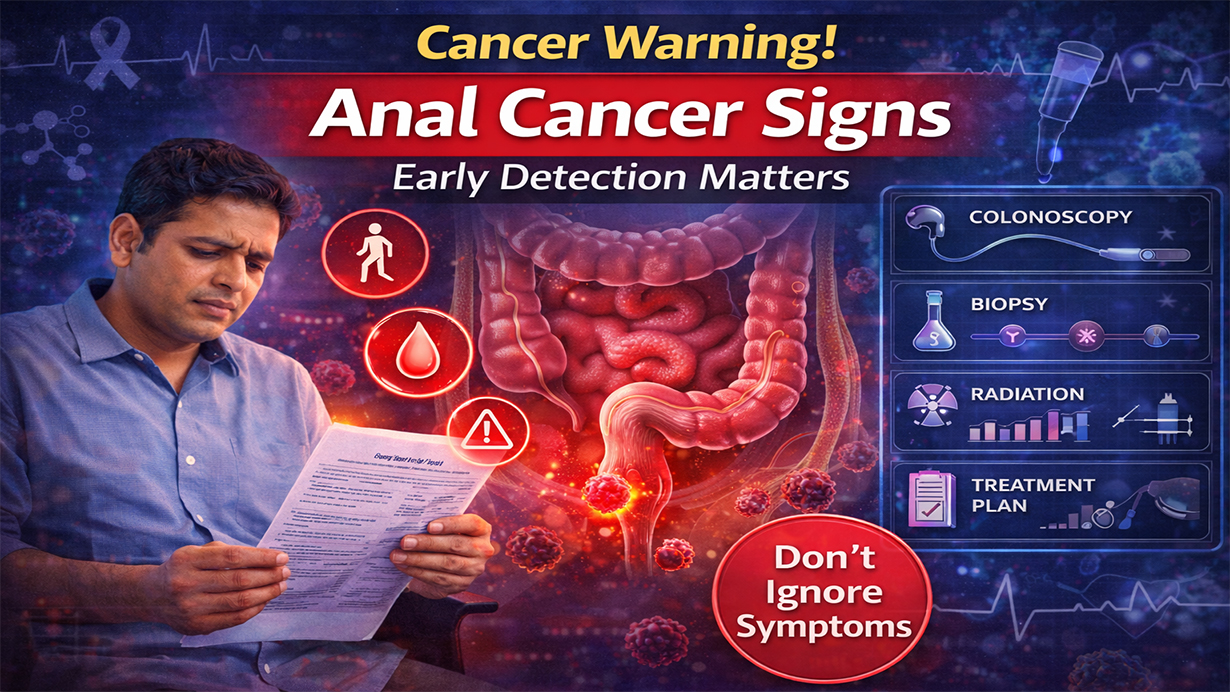
When it comes to cancers that people are reluctant to discuss, anal cancer often tops the list. shrouded in silence, a lack of awareness can lead to delayed diagnoses and more complex treatments. However, understanding this disease is the first step toward demystifying it. With advancements in medical technology and the expertise of specialists, anal cancer is increasingly treatable, especially when caught early.
To shed light on this condition, we turn to Dr. Sourabh Mukharjee, Sr. Consultant Surgical Oncology, Kailash Deepak Hospital. With a wealth of experience in treating pelvic and gastrointestinal malignancies, Dr. Sourabh Mukharjee emphasizes that “Patient education is just as vital as the surgery itself. Knowing the signs can save your life.”
What is Anal Cancer?
Anal cancer is a rare type of malignancy that forms in the tissues of the anus. While it is often confused with colorectal cancer, it is a distinct disease requiring different treatment strategies. The primary cause is often linked to the Human Papillomavirus (HPV), a common virus that can lead to cellular changes in the anal canal .
Key Symptoms You Should Not Ignore
One of the biggest challenges with anal cancer is that its symptoms are often mistaken for common, benign conditions like hemorrhoids. Dr. Sourabh Mukharjee advises that “Any persistent change in bowel habits or discomfort should be evaluated professionally, rather than self-treating for piles.”
Key symptoms to watch for include:
- Rectal Bleeding: This is the most common sign. Even small amounts of blood on the stool or toilet paper warrant a check-up.
- Pain or Pressure: A sensation of fullness or persistent pain in the anal area.
- Itching and Discharge: Chronic itching (pruritus) or unusual discharge from the anus.
- Lump Formation: A lump or mass near the anus.
- Change in Bowel Habits: Narrowing of the stool or a feeling of incomplete evacuation.
If you experience any of these anal cancer symptoms for more than a few weeks, it is crucial to consult a specialist. At Kailash Deepak Hospital, diagnostic procedures like high-resolution anoscopy and biopsies are performed to differentiate between benign issues and malignancy .
Causes and Risk Factors
Understanding the root causes helps in prevention and early screening. While HPV infection is the primary driver, other factors increase susceptibility. As a leading cancer hospital in Delhi, Kailash Deepak Hospital often sees patients with multiple risk factors, including:
- HPV Infection: It plays a major role in the vast majority of cases.
- Immunosuppression: Patients with weakened immune systems, such as those who have undergone organ transplants or are HIV-positive, are at higher risk.
- Age: Most cases occur in people over 50.
- Smoking: Tobacco use significantly increases the risk of developing anal cancer.
Also read : Beyond the Lump: Understanding Breast Cancer, Its Early Signs, and Life-Saving Treatments
Treatment Options Available
Gone are the days when a diagnosis of anal cancer meant radical, life-altering surgery for everyone. Today, the standard of care often involves a multidisciplinary approach, which is a cornerstone of practice at Kailash Deepak Hospital.
Dr. Sourabh Mukharjee explains, “The goal of modern oncology is to cure the disease while preserving function as much as possible. We tailor the treatment plan based on the stage and location of the tumor.”
- Chemoradiation (The Standard of Care): For most localized anal cancers, the primary treatment is a combination of chemotherapy and radiation therapy (chemoradiation). This approach is highly effective and often avoids the need for surgery.
- Surgical Intervention: If the tumor persists after chemoradiation (residual disease), or if the patient cannot tolerate combined therapy, surgery becomes necessary. Dr. Sourabh Mukharjee specializes in advanced surgical oncology procedures, including abdominoperineal resection (APR) for complex cases. With the use of robotic and minimally invasive methods, the hospital is committed to achieving better recovery times and outcomes for its patients.
- Immunotherapy: For advanced or metastatic cases, immunotherapy is emerging as a powerful tool, helping the body”s immune system recognize and attack cancer cells.
The Importance of Integrated Care
Navigating a cancer diagnosis requires more than just medical intervention; it requires emotional and nutritional support. As a premier cancer specialist hospital in Delhi, Kailash Deepak Hospital provides holistic care. From palliative care to manage side effects to nutritional counseling that helps patients maintain strength during treatment, the ecosystem is designed to support the whole person, not just the disease .
Conclusion
Anal cancer, though rare, is a highly curable disease when detected early. By breaking the stigma and talking openly about the symptoms, we can encourage timely medical consultation. With experts like Dr. Sourabh Mukharjee leading the charge in Surgical Oncology and state-of-the-art facilities at Kailash Deepak Hospital, patients have access to world-class treatment right in their community. If you notice any persistent changes in your body, do not hesitate to seek expert advice—early intervention is the key to successful outcomes.