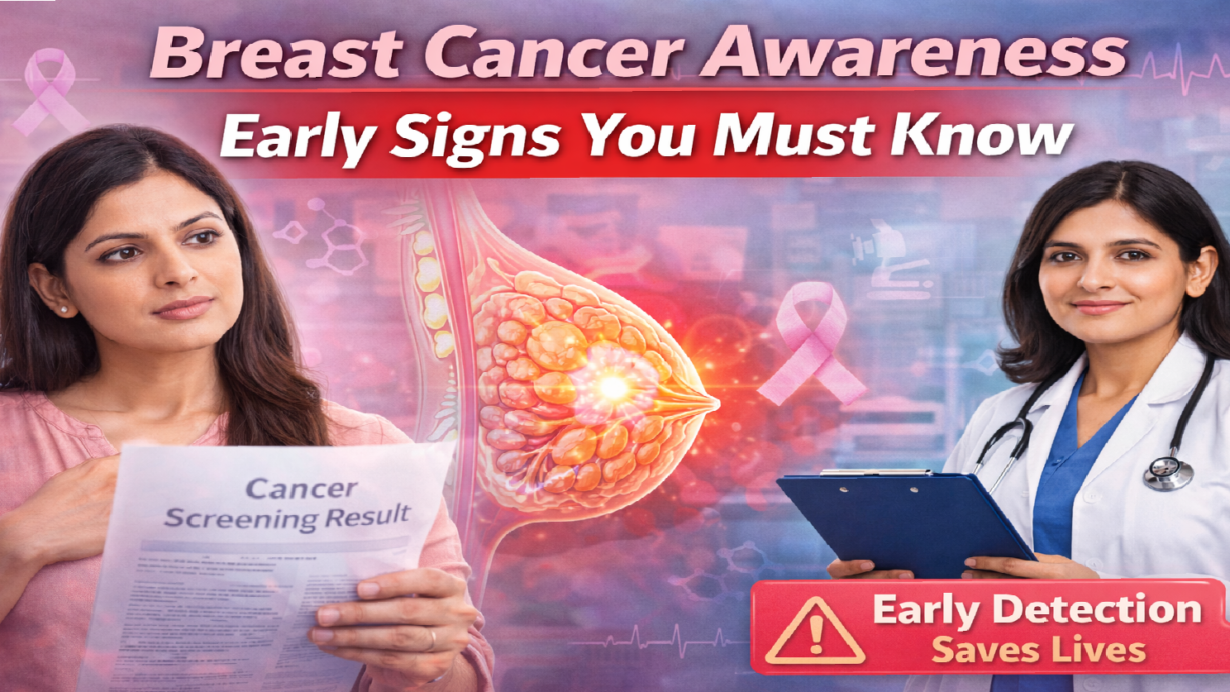
Breast cancer remains one of the most frequently diagnosed cancers among women across the world. Despite increasing awareness, many cases are still detected at later stages due to a lack of knowledge about early symptoms or hesitation to seek medical advice.
Breast cancer develops when abnormal cells in breast tissue begin to multiply in an uncontrolled way. Over time, these cells can form a mass known as a tumor and may spread to surrounding tissues or other parts of the body if left untreated.
According to Dr. Sourabh Mukharjee, Sr. Consultant Surgical Oncology, Kailash Deepak Hospital, Delhi, understanding the early indicators of breast cancer plays a crucial role in saving lives.
“The biggest challenge in breast cancer management is delayed diagnosis. Many patients wait too long before consulting a specialist. Early medical attention significantly improves survival rates,” says Dr. Sourabh Mukharjee.
Specialists at Kailash Deepak Hospital, Delhi emphasize the importance of regular screening, lifestyle awareness, and timely medical intervention for effective breast cancer treatment.
What Exactly is Breast Cancer?
Breast cancer begins when healthy breast cells undergo abnormal genetic changes and start growing uncontrollably. These abnormal cells accumulate and form a tumor that may be benign (non-cancerous) or malignant (cancerous).
Malignant tumors have the ability to invade nearby tissues and spread through the bloodstream or lymphatic system.
Breast cancer most commonly starts in:
- Milk ducts that carry milk to the nipple
- Lobules, which are the glands responsible for milk production
- Surrounding breast tissue
“Breast cancer is not a single disease but a group of conditions with different biological behaviors,” explains Dr. Sourabh Mukharjee, Sr. Consultant Surgical Oncology, Kailash Deepak Hospital, Delhi.
This is why treatment strategies vary depending on the stage and type of cancer.
Early Warning Signs That Should Not Be Ignored
One of the most important aspects of breast cancer awareness is recognizing the early signs. Although many people associate breast cancer only with lumps, the disease can present in several ways.
Common warning signs include:
- A lump in the breast or underarm area
- Noticeable change in breast size or contour
- Thickened skin on the breast
- Nipple turning inward unexpectedly
- Discharge from the nipple not related to breastfeeding
- Persistent pain in one area of the breast
- Redness or warmth in breast tissue
Some women may not experience noticeable symptoms in the early stages, which is why regular screening is essential.“Women should perform self-examinations and pay attention to even small changes. Detecting abnormalities early greatly increases treatment success,” advises Dr. Sourabh Mukharjee.
Factors That Increase the Risk of Breast Cancer
Breast cancer can occur in any woman, but certain factors may increase the likelihood of developing the disease.
Increasing Age
The probability of breast cancer rises as individuals grow older, particularly after the age of 40.
Family History of Cancer
Having a close relative diagnosed with breast or ovarian cancer may increase personal risk.
Hormonal Influences
Long-term exposure to estrogen hormones may contribute to breast cancer development.
Lifestyle Habits
Modern lifestyle patterns may also play a role. These include:
- Sedentary lifestyle
- High-fat diet
- Obesity
- Excess alcohol consumption
Genetic Mutations
Certain inherited gene mutations can significantly increase the risk of breast cancer.“Women with a strong family history should discuss screening strategies with their doctor at an earlier age,” says Dr. Sourabh Mukharjee, Sr. Consultant Surgical Oncology, Kailash Deepak Hospital, Delhi.
Types of Breast Cancer
Breast cancer can develop in different forms depending on where abnormal cells originate.
Invasive Ductal Carcinoma
This is the most commonly diagnosed form and begins in the milk ducts before spreading to surrounding tissue.
Inflammatory Breast Cancer
A rare but aggressive cancer that causes swelling, redness, and skin thickening.
Hormone-Sensitive Breast Cancer
Some tumors grow in response to hormones like estrogen or progesterone.
Each type requires specialized medical evaluation and treatment planning.
How Doctors Diagnose Breast Cancer
When a patient reports suspicious symptoms, doctors perform several tests to determine whether cancer is present.
Clinical Examination
A physical examination helps doctors evaluate lumps or unusual breast changes.
Mammography
A mammogram uses low-dose X-rays to detect abnormalities in breast tissue.
Ultrasound Imaging
Ultrasound helps determine whether a lump is solid or filled with fluid.
Biopsy
A biopsy involves collecting tissue samples for laboratory testing. This test confirms whether cancer cells are present.
“Biopsy results provide the most definitive information about the nature of a breast lump,” explains Dr. Sourabh Mukharjee.
At Kailash Deepak Hospital, Delhi, advanced diagnostic techniques help ensure accurate and early detection.
Treatment Approaches for Breast Cancer
Treatment for breast cancer varies depending on factors such as tumor size, stage of disease, and overall patient health.
Surgical Treatment
Surgery is often the primary treatment method.
Common procedures include:
- Lumpectomy – removal of the tumor while preserving the breast
- Mastectomy – removal of the entire breast in certain cases
Chemotherapy
Chemotherapy uses specialized drugs to destroy cancer cells or stop their growth.
Radiation Therapy
Radiation therapy targets cancer cells using controlled high-energy radiation beams.
Targeted Drug Therapy
Certain medications specifically attack cancer cell proteins responsible for tumor growth.
Hormone Therapy
Hormone therapy blocks the hormones that some breast cancers rely on for growth.“Treatment planning is personalized for each patient to achieve the best possible outcomes,” says Dr. Sourabh Mukharjee, Sr. Consultant Surgical Oncology, Kailash Deepak Hospital, Delhi.
Lifestyle Habits That May Lower Risk
While breast cancer cannot always be prevented, adopting healthy habits may reduce the risk.
Balanced Nutrition
Eating a diet rich in vegetables, fruits, and whole grains helps maintain overall health.
Regular Exercise
Physical activity helps regulate hormones and maintain healthy body weight.
Limiting Alcohol Intake
Reducing alcohol consumption may decrease cancer risk.
Routine Screening
Regular screening tests are essential for early detection.“The earlier breast cancer is detected, the better the chances of successful treatment,” emphasizes Dr. Sourabh Mukharjee.
Why Early Awareness Matters
Many breast cancer cases become life-threatening simply because diagnosis happens too late. Public awareness about symptoms and screening can significantly reduce this risk.
Healthcare institutions like Kailash Deepak Hospital, Delhi focus on patient education, early diagnosis, and comprehensive cancer treatment.
“When patients come for consultation at an early stage, treatment becomes less complicated and recovery outcomes improve dramatically,” says Dr. Sourabh Mukharjee.
Conclusion
Breast cancer continues to affect millions of women worldwide, but medical advancements have significantly improved diagnosis and treatment options. Awareness about early symptoms, regular screening, and prompt medical consultation remain the most effective strategies in combating this disease.
If individuals notice unusual breast changes or persistent symptoms, consulting experienced oncology specialists is essential.
Under the guidance of experts like Dr. Sourabh Mukharjee, Sr. Consultant Surgical Oncology, Kailash Deepak Hospital, Delhi, patients receive comprehensive care designed to detect cancer early and provide advanced treatment solutions for better health outcomes.