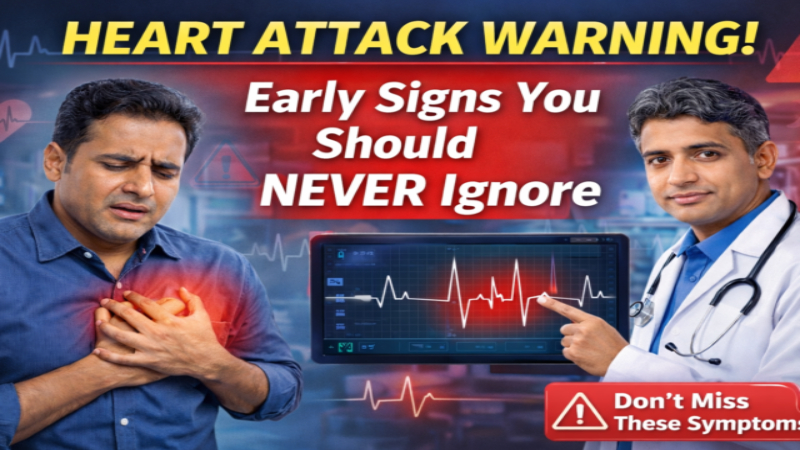
Heart attacks are no longer limited to older adults. In recent years, India has seen a concerning rise in heart attack cases among young and middle-aged individuals. Recognizing the early warning signs of a heart attack can be life-saving. Immediate medical care reduces heart muscle damage and significantly improves survival rates.
At Kailash Hospital, Noida, comprehensive cardiac emergency services and advanced interventional cardiology support ensure timely management of acute cardiac events.
What Is a Heart Attack?
A heart attack, medically termed Myocardial Infarction (MI), occurs when blood flow to the heart muscle is blocked due to a clot in one or more coronary arteries. This blockage prevents oxygen from reaching the heart tissue, leading to muscle damage.
The faster the blood flow is restored through emergency treatment such as angioplasty, the better the recovery outcomes.
Early Warning Signs of a Heart Attack
Heart attack symptoms can vary from person to person. Some are dramatic, while others may be subtle.
1. Chest Pain or Discomfort
- Pressure, tightness, heaviness, or squeezing sensation
- Pain lasting more than a few minutes
- Discomfort that comes and goes
This is the most common symptom of a heart attack.
2. Pain Radiating to Other Areas
Pain may spread to:
- Left arm (most common)
- Both arms
- Neck
- Jaw
- Back
- Upper abdomen
This referred pain pattern is typical in cardiac emergencies.
3. Shortness of Breath
Breathlessness may occur with or without chest pain. It can feel like:
- Inability to take a full breath
- Sudden fatigue during minimal activity
4. Excessive Sweating
Cold sweats without physical exertion can indicate a cardiac event.
5. Nausea, Vomiting, or Indigestion
Some patients, especially women, experience symptoms resembling acidity or gastric discomfort.
6. Unusual Fatigue
Extreme tiredness without reason, especially in women, can be an early warning sign days before a major heart attack.
7. Dizziness or Lightheadedness
Sudden weakness, fainting, or imbalance may indicate reduced blood flow to the brain due to cardiac dysfunction.
Symptoms of Heart Attack in Women
Women often experience atypical symptoms such as:
- Back pain
- Jaw pain
- Shortness of breath without chest pain
- Nausea
- Unexplained fatigue
This is why awareness is critical, as symptoms may be misinterpreted.
Risk Factors for Heart Attack
Certain conditions significantly increase the risk of heart attack:
- High blood pressure (Hypertension)
- High cholesterol
- Diabetes
- Smoking
- Obesity
- Sedentary lifestyle
- Family history of heart disease
- Chronic stress
Early screening and preventive cardiology play a key role in reducing risk.
What to Do During a Suspected Heart Attack?
If you notice warning signs:
- Do not ignore the symptoms.
- Seek emergency medical help immediately.
- Avoid driving yourself if symptoms are severe.
- Chew aspirin (if not allergic) while waiting for medical help, if advised.
Every minute counts. The “Golden Hour” is crucial for preventing permanent heart damage.
Diagnosis and Emergency Cardiac Care
- ECG (Electrocardiogram)
- Cardiac Enzyme Tests (Troponin)
- Echocardiography
- Coronary Angiography
Advanced interventional procedures such as primary angioplasty are available for immediate restoration of blood flow.
Preventing a Heart Attack
Preventive cardiology focuses on:
- Regular blood pressure monitoring
- Cholesterol management
- Blood sugar control
- Healthy diet (low saturated fat, low salt)
- Regular exercise (30 minutes daily)
- Stress reduction
- Smoking cessation
Routine heart health check-ups can detect early abnormalities before a major cardiac event occurs.
When Should You See a Cardiologist?
Consult a cardiologist if you:
- Experience recurrent chest discomfort
- Have multiple risk factors
- Have a family history of heart disease
- Notice reduced exercise tolerance
Early evaluation can prevent serious complications.
Conclusion
A heart attack often gives warning signs before it strikes. Ignoring chest pain, breathlessness, or unexplained fatigue can be dangerous. Awareness, early diagnosis, and prompt treatment are the keys to survival. Kailash Hospital, Noida, provides comprehensive cardiac care with experienced cardiologists and advanced infrastructure to manage both preventive and emergency heart conditions.
If you or your loved one experiences symptoms of a heart attack, seek immediate medical attention.